Hard Questions About Immigration and Catholic Social Teaching
Conclusion to Immigrations Series: Addressing the Strongest Objections from Both Sides
by CAPP-USA
Immigration debates often generate more heat than light — in part because the strongest objections on both sides are never fully addressed. This piece does that directly. Catholic Social Teaching does not belong to the left or the right. It critiques both — because it begins not with ideology, but with the dignity of the human person and the demands of the common good.
Serious questions remain.
Because immigration is one of the most polarized issues in public life, the strongest objections deserve to be addressed directly — not dismissed, caricatured, or simplified.
Catholic Social Teaching does not belong to the political left or right. It critiques both because it begins not with ideology, but with a moral vision rooted in the dignity of the human person and ordered toward the common good.
The objections surrounding immigration are often serious precisely because they involve competing moral goods: law and mercy, order and solidarity, sovereignty and human dignity.
CAPP-USA's series on immigration has examined these tensions carefully — distinguishing legal from moral categories, clarifying the duties of immigrants and nations, and confronting what happens when law and moral reality diverge. What follows addresses the strongest remaining objections as they are actually raised — by Catholics and people of good will across the political spectrum.
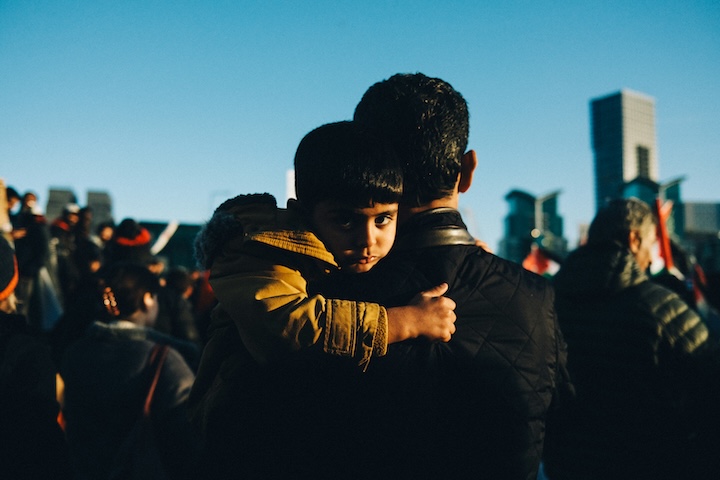
Questions about immigration from both sides should not be ignored, but answered.
FREQUENTLY ASKED QUESTIONS
These questions tend to cluster around three concerns: law, fairness, and political responsibility.
I. Law and Moral Responsibility
Are you justifying illegal immigration?
No.
Catholic Social Teaching does not treat immigration law as optional, nor does it endorse open borders. Nations possess both a legitimate right and a serious duty to regulate migration in service of the common good.
What this framework clarifies, however, is that legal violation and moral guilt are not always identical. Catholic moral theology has long recognized that in cases of grave necessity — where no proportionate alternative exists — moral responsibility may be diminished or even absent.
This is not a justification of disorder. It is a recognition that justice requires prudence and attention to concrete circumstances, not slogans.
Doesn’t this undermine the rule of law?
No.
The rule of law is itself a moral good. It provides stability, protects the vulnerable, and preserves the conditions necessary for social flourishing.
Catholic Social Teaching affirms civil authority and the obligation to obey just laws. Evaluating moral culpability in particular cases does not weaken law. It reflects the Church's longstanding understanding that justice requires prudence and attention to real human circumstances.
Why not simply declare all undocumented immigrants morally
innocent?
Because Catholic moral theology does not operate through ideological absolutes detached from reality.
Some migrants may have acted under grave necessity and therefore bear little or no moral culpability. Others may have acted primarily from opportunity, which carries greater moral weight. Most situations fall somewhere in between.
Catholic Social Teaching evaluates actions through intention, circumstance, and available alternatives — not ideological categories.
II. Justice and Fairness
What about fairness to those who immigrated legally?
This concern is legitimate and must be taken seriously.
Justice requires respect for those who followed legal processes, often at significant personal cost. Any reform consistent with Catholic Social Teaching must avoid incentivizing disorder and must account for the sacrifices of lawful immigrants.
At the same time, moral analysis cannot assume that a viable legal pathway always existed. In some cases — especially involving danger, severe instability, or legal systems that provide no viable avenue for relief — no proportionate alternative was realistically available.
Justice must consider all affected parties, not only one group.
Is economic hardship enough to justify crossing illegally?
Not automatically.
Catholic teaching does not equate the desire for greater opportunity with grave necessity. The principle of necessity applies when basic survival or fundamental duties to protect one's family are at stake — and no proportionate alternative exists.
Economic migration motivated primarily by preference carries different moral weight than flight from violence, persecution, or life-threatening deprivation.
Most cases require careful moral discernment — not slogans or ideological categories.
Is deportation always wrong?
No.
The Church does not teach that immigration enforcement is inherently immoral. Governments may enforce immigration law when doing so is proportionate and genuinely ordered toward the common good.
But enforcement must respect human dignity, safeguard due process, and avoid unnecessary harm — particularly to families and children.
Justice in applying law to complex human realities requires prudence, not rigidity.
III. Political Order and Responsibility
Are you saying borders don’t matter?
No.
Political communities are legitimate and necessary. Sovereignty serves the common good by preserving order, public safety, and social stability.
Catholic Social Teaching affirms the right of nations to regulate migration. But it also insists that this authority be exercised in a manner consistent with the dignity of the human person.
Solidarity does not eliminate subsidiarity. Compassion does not erase political responsibility.
Is this political advocacy dressed up as theology?
No.
This framework does not endorse specific legislation or partisan programs. It applies enduring principles — human dignity, solidarity, subsidiarity, and the common good — to contemporary realities.
Because it begins with a vision of the human person rather than ideology, Catholic Social Teaching critiques distortions on both sides. It rejects both open-border utopianism and the reduction of migrants to legal infractions detached from moral context.
Who bears primary responsibility for reform?
Policymakers.
The political community has a primary responsibility to protect the safety, stability, and economic well-being of its citizens — and immigration policy must serve that responsibility.
At the same time, lawmakers must ensure that legal frameworks do not create contradictions that undermine human dignity or permanently marginalize long-term residents without proportionate justification.
Responsibility is shared — but not identical — among migrants, citizens, and government.
The Core Takeaway
Catholic Social Teaching insists on holding together truths that are often separated:
- Legal status and moral standing are not always identical
- Nations possess the right to regulate borders
- The dignity of the human person precedes the state
- Both immigrants and political communities possess real duties
None of these truths cancels the others. All of them must be held together.
Conclusion
Immigration debates often force false choices: compassion or order, welcome or law, dignity or security. Catholic Social Teaching refuses that reduction — not because these goods are easily reconciled, but because prudence, clarity, and honesty about reality make it possible to hold them together.
The question is not simply how to manage immigration. It is how to order law and society in a way that remains faithful both to the dignity of the human person and to the demands of the common good.
That is the standard Catholic Social Teaching sets — and the standard by which immigration policy, like all political authority, must ultimately be judged.
Explore the Framework
For the complete teaching: Immigration, Law, and the Moral Order: A Catholic Framework
Revisit the series:
- Part 1: Law and Morality
- Part 2: Real Cases
- Part 3: Rights and Duties
- Part 4: When There Is No Path to Citizenship
- Part 5: Immigration Reform and the Path to Citizenship
Further reading:
- What Is Catholic Social Teaching?
- The Three Principles of CST
- Human Dignity — Dignity is intrinsic. Legal status does not define a person's worth before God or before the law as it ought to be.
- Solidarity — The bonds that connect us to those who have become part of our
communities are real moral bonds, not merely sentimental ones. - Subsidiarity — Different responsibilities belong to different levels of authority. Pastoral accompaniment cannot substitute for legal judgment, nor can legal structures ignore moral reality.
- The Common Good — Laws should enable constructive participation, not produce permanent marginalization. A system that offers no path to reconciliation fails both the individual and the community.
- Immigration & Mass Deportations
- Pope Leo XIV, 2025 World Day of Migrants and Refugees