Is Undocumented Immigration a Sin?
Part 1: Law, Morality, and the Human Person
by CAPP-USA
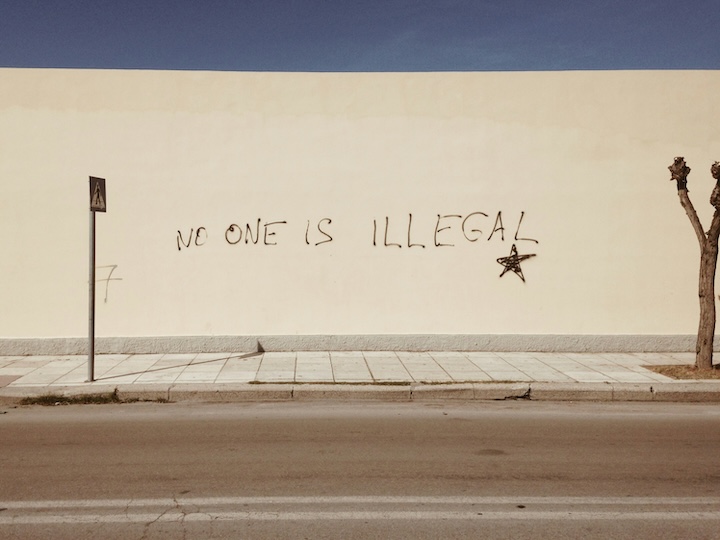
Is undocumented immigration a sin? The first part of this article series distinguishes legal from moral.
Is undocumented immigration a sin? To answer this question, we must begin with a critical distinction:
what is illegal is not always the same as what is immoral.
Immigration is one of the most polarizing issues in American life. Too often, the debate reduces complex legal and moral realities to slogans. But for those seeking clarity, the real question is more precise:
If someone enters or remains in the United States unlawfully, have they committed a serious sin?
The answer is not a simple “yes” or “no.”
U.S. immigration law is complex. Catholic moral teaching is nuanced. And real human lives—often shaped by hardship, danger, and necessity—are at stake.
This article begins a series that develops a broader framework for understanding immigration—one grounded in Catholic Social Teaching, while drawing on Catholic moral theology where questions of personal culpability arise.
A Catholic Framework: Beyond Politics
Catholic Social Teaching does not evaluate immigration primarily through partisan categories such as “security” or “inclusion.”
Instead, it asks a deeper question: What serves the human person and promotes the common good?
Answering that question requires holding together several essential elements: the rule of law, the dignity of the human person, and the responsibilities of both the political community and immigrants themselves.
This framework—developed across centuries of Church teaching—allows us to move beyond ideological extremes and toward moral clarity.
The Legal Distinction Most People Miss
A major source of confusion in the immigration debate is a basic legal fact: U.S. immigration law operates on two distinct tracks: civil and criminal.
This distinction is not merely technical. It has direct implications for how we evaluate moral responsibility.
In many cases, a single individual may face civil consequences for unlawful presence while also being subject to criminal penalties based on how they entered. Failing to distinguish between these categories leads to serious misunderstandings—both legally and morally.
Civil vs. Criminal Immigration Violations
Most immigration violations are civil matters, such as overstaying a visa, working without authorization, or being present without proper documentation. These are not crimes in the legal sense. They are handled in immigration court, where the typical consequence is removal rather than imprisonment, and where individuals do not have a guaranteed right to government-appointed counsel.
By contrast, certain actions are prosecuted as criminal offenses, including improper entry (a misdemeanor under 8 U.S.C. §1325), illegal reentry after removal (a felony), and fraud or smuggling. These cases are handled in federal criminal courts and can result in imprisonment.
This distinction is often overlooked in public debate—but it is essential for any serious moral analysis.
For a deeper look at how these legal categories intersect with policy debates, see Immigration & Mass Deportations: The President and the Pope
Law vs. Morality: A Critical Distinction
Not every violation of law carries the same moral weight.
Catholic moral theology draws a fundamental distinction between the objective act—what was done—and subjective culpability, which concerns the person’s moral responsibility.
This distinction is foundational, and it is often missing from public discussions of immigration.
THE PRINCIPLE OF NECESSITY
St. Thomas Aquinas teaches that in cases of extreme necessity, taking what is needed for survival is not theft:
“In cases of need all things are common property.” (St. Thomas Aquinas, Summa Theologica II-II, Q. 66, Art. 7)
This insight reflects a broader principle within Catholic Social Teaching often described as the universal destination of goods.
In practical terms, this means that when survival is at stake, the moral order recognizes that strict legal claims may give way to urgent human need.
This principle, however, is not a blanket justification for disregarding the law. It applies only when the need is grave, harm is imminent, and no reasonable alternative exists.
CULPABILITY, CONSCIENCE, AND THE CATECHISM
The Church does not treat immigration law as optional. But it does recognize that moral responsibility can be reduced—or even eliminated—depending on circumstances.
Catholic moral theology teaches that citizens are not bound in conscience to obey laws that are contrary to the moral order (CCC 2242), and that moral guilt depends on knowledge, freedom, and circumstance. (CCC 1857–1860)
Applied to immigration, this means that when a law stands between a person and survival, the moral culpability for violating that law may be significantly diminished.
When Is Illegal Immigration (Less) Sinful?
The moral mitigation recognized in Catholic moral theology applies only in cases of genuine necessity—such as when a person is fleeing violence or persecution, escaping life-threatening conditions, or seeking the basic means to provide for their family when no viable alternative exists.
The further a situation moves from true necessity, the stronger the obligation to obey the law.
Catholic Social Teaching, for its part, insists that legal systems themselves must be evaluated in light of the human person and the common good.
What This Means for the Immigration Debate
This framework challenges both sides of the public debate. It rejects the idea that all immigration violations are morally equivalent, and it rejects the claim that law can be ignored without moral consequence.
Instead, it calls for a more demanding standard:
Each case must be evaluated in light of human dignity, moral responsibility, and the common good.
This requires holding together two distinct but related levels of analysis:
- Catholic moral theology, which evaluates the moral responsibility of the individual
- Catholic Social Teaching, which evaluates whether laws and policies are ordered to justice and the common good
Continue the Series
This question cannot be resolved in the abstract. It must be judged in the concrete realities of human life.
Next: Part 2 — Real Cases and Moral Complexity