Catholic Social Teaching and Immigrant Stories
Part 2: The Human Face of Law and Morality
by CAPP-USA
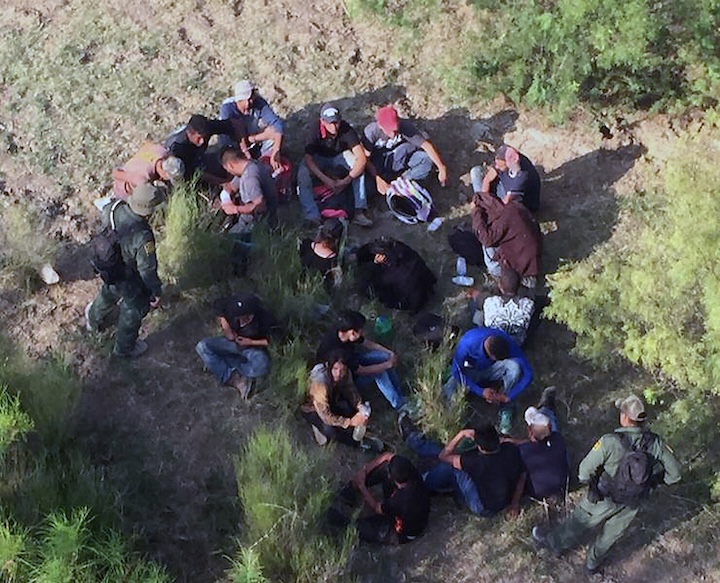
These immigrant stories help illustrate Catholic social teaching in action.
In Part 1 – Law, Morality, and Undocumented Immigrants, we explored the vital distinction between legal violations and moral culpability. Specifically, what is illegal is not always the same as what is immoral.
That distinction, however, cannot remain abstract.
Catholic Social Teaching evaluates immigration at the level of society—law, policy, and the common good.
Catholic moral theology evaluates the moral responsibility of individual persons.
This is where the question becomes more demanding:
How do we evaluate moral responsibility in real lives—not just in principle?
The following cases illustrate how the Church’s moral framework applies in practice.
Four Stories: One Moral Framework
1. MARIA: FLEEING VIOLENCE
Maria lived in rural Honduras. Gangs killed her husband and threatened to recruit her 14-year-old son. Local authorities could not protect them. She fled with her children and crossed the U.S. border unlawfully.
Moral Analysis (Catholic moral theology): Maria acted under extreme necessity to fulfill a fundamental moral duty: protecting her children. While her entry violated civil law, her moral culpability is likely absent. Catholic moral theology recognizes that the duty to preserve life can outweigh legal requirements when no reasonable alternative exists.
Implication for Catholic Social Teaching: Cases like Maria’s underscore the responsibility of political communities to provide legal pathways—such as asylum—that recognize situations of grave necessity.
2. CARLOS: THE DACA RECIPIENT
Carlos was brought to the U.S. at age three. Now 25, he is a college graduate and a teacher. He has no memory of his country of birth. The United States is the only home he has ever known.
Moral Analysis (Catholic moral theology): Carlos bears no moral responsibility for his parents’ decision. More than that, he has contributed to the common good—through work, education, and civic participation. His legal status is a civil classification, not a moral failing.
Implication for Catholic Social Teaching: Carlos’s situation raises questions of justice at the level of law and policy. A system that offers no permanent path for those who have lived, contributed, and formed their identity within a society raises serious concerns about the common good.
3. ROBERTO: THE ECONOMIC MIGRANT
Roberto left a region of deep poverty to earn higher wages for his family. They were not starving, but opportunities were limited, and legal pathways to migrate were effectively unavailable.
Moral Analysis (Catholic moral theology): This is a morally complex case. Roberto did not face immediate danger in the way Maria did. His decision, therefore, carries greater moral weight. His culpability may be mitigated by his intention to support his family, the absence of realistic alternatives, and his subsequent conduct—but it is not eliminated.
Implication for Catholic Social Teaching: Catholic Social Teaching recognizes both the right to seek the conditions for a dignified life and the importance of laws ordered to the common good. Cases like Roberto’s point to the need for legal frameworks that are both orderly and realistically accessible.
4. ELENA: DECADES OF INTEGRATION
Elena entered illegally 20 years ago. Since then, she has married a U.S. citizen, raised three children, paid taxes, and served her parish. She now faces deportation.
Moral Analysis (Catholic moral theology): Even if Elena’s original entry carried some moral fault, her subsequent life reflects sustained responsibility, contribution, and commitment to family and community. Her moral situation cannot be evaluated solely in terms of her initial act.
Implication for Catholic Social Teaching: Catholic Social Teaching recognizes that long-term presence, contribution, and integration create real bonds of solidarity. When law provides no path to reconciliation after decades of such integration, it raises serious questions about whether the legal framework remains ordered to the common good—whether the law itself requires reform.
Common Questions Clearly Answered
“THEY BROKE THE LAW. HOW IS THAT NOT A SIN?”
Not all violations of law carry the same moral weight.
Catholic moral theology distinguishes between legal and moral culpability. Moral responsibility depends on intention, knowledge, freedom, and circumstance—not simply legal status.
The Catechism of the Catholic Church teaches we are not bound in conscience to follow laws that conflict with the moral order (CCC 2242).
“ISN’T THIS ENCOURAGING ILLEGAL IMMIGRATION?”
No.
Catholic social teaching affirms that nations have a right to regulate their borders and that immigrants have duties to their host country (which we cover in Part 3).
What this framework clarifies is that legal status and moral standing are not identical.
At the same time, Catholic Social Teaching calls for laws that reduce situations in which individuals are forced to choose between survival and compliance—between obeying the law and preserving their lives.
“WHAT ABOUT THOSE WHO ‘WAITED IN LINE?’ THOSE WHO FOLLOWED THE LEGAL PROCESS?”
This is a valid concern and relates directly to the common good.
Catholic Social Teaching insists that justice must respect those who follow the law.
At the same time, this objection often assumes something that is not always true: that a clear, accessible “line” exists for everyone. For many—especially those in urgent or dangerous situations—no realistic or accessible legal pathway exists.
A just system must be both orderly and humane.
“DOESN’T STAYING ILLEGAL FOR YEARS MAKE IT WORSE?”
Not necessarily.
Catholic moral theology evaluates the individual’s conduct over time, including responsibility, contribution, and family life.
Catholic Social Teaching, in turn, recognizes that long-term presence creates bonds of solidarity that law should take seriously. These relationships become part of the social fabric and must be considered in any just legal framework.
From Principle to Judgment
Part 1 established the principles.
Part 2 shows what those principles require:
Moral judgment cannot be made in the abstract. It must consider the person, the circumstances, and the common good.
This is more demanding than slogans—but it is also more just.
Continue the Series
The next question follows naturally:
What do immigrants owe to the countries they enter—and what do nations owe in return?
Next: Part 3 — The Rights and Duties of Immigrants and Nations




CAPP-USA (Centesimus Annus Pro Pontifice, Inc.) is the United States affiliate of the Vatican-based pontifical foundation of Fondazione Centesimus Annus Pro Pontifice, established by Pope St. John Paul II in 1993 to promote Catholic Social Teaching in fidelity to the Magisterium of the Catholic Church. CAPP-USA is a 501(c)(3) nonprofit organization.