What does the Bible Say About Immigration?
by CAPP-USA
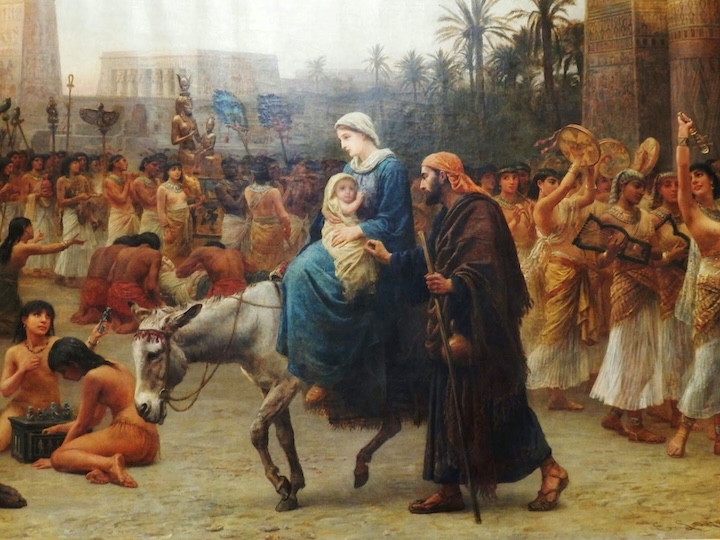
The Holy Family were refugees. The Bible has much to say about immigration and God’s care for immigrants.
When immigration debates heat up, Christians on all sides cite Scripture. But what does the Bible actually say about migration, borders, and welcoming strangers?
The answer is more complex—and more challenging—than either side of the political debate suggests.
What the Old Testament Says About Immigrants
First of all, we should appreciate that Abraham himself was a migrant/immigrant.
The Hebrew Bible uses several words for foreigners, each with distinct meanings:
THE GER (SOJOURNER/RESIDENT ALIEN)
This term appears over 90 times in the Old Testament. The ger was a non-Israelite living among God’s people—similar to today’s immigrants or refugees.
God’s law commanded specific treatment of the ger:
“When an alien resides with you in your land, do not mistreat such a one. You shall treat the alien who resides with you no differently than the natives born among you; you shall love the alien as yourself; for you too were once aliens in the land of Egypt. I, the Lord, am your God.” (Leviticus 19:33-34)
Notice the reasoning: Israel’s own history as immigrants and refugees creates moral obligation toward others in similar situations.
This wasn’t an isolated command. The pattern repeats throughout the Torah:
- “You shall not wrong a sojourner or oppress him, for you were sojourners in the land of Egypt.” (Exodus 22:21)
- “You shall not oppress a sojourner. You know the heart of a sojourner, for you were sojourners in the land of Egypt.” (Exodus 23:9)
- “Love the sojourner, therefore, for you were sojourners in the land of Egypt.” (Deuteronomy 10:19)
Key Point: God repeatedly ties Israel’s treatment of immigrants to their own experience of vulnerability and displacement. The command is grounded in empathy and memory.
LEGAL PROTECTIONS FOR IMMIGRANTS
Old Testament law extended specific protections to the ger:
- Equal justice: “You shall have the same rule for the sojourner and for the native, for I am the LORD your God.” (Leviticus 24:22)
- Economic provision: Farmers were required to leave gleanings for “the sojourner, the fatherless, and the widow” (Deuteronomy 24:19-21)
- Inclusion in religious festivals: “You shall rejoice before the LORD your God, you and your son and your daughter… and the sojourner who is among you” (Deuteronomy 16:11)
- Cities of refuge: Even foreigners who accidentally killed someone could seek asylum. (Numbers 35:15)
WHAT ABOUT BORDER CONTROL?
Some argue that ancient Israel had borders and defended them—true. Others note that Israel conquered Canaan and displaced inhabitants—also true.
However, these historical facts don’t answer the moral question. The prophets consistently condemned Israel when they:
- Oppressed the vulnerable (including immigrants): “Do not oppress the sojourner” (Jeremiah 7:6; Zechariah 7:10)
- Failed to show justice: “The people of the land have practiced extortion and committed robbery. They have oppressed the poor and needy, and have extorted from the sojourner without justice” (Ezekiel 22:29)
God’s judgment fell on nations—including Israel—for mistreating the vulnerable, including immigrants.
What the New Testament Says About Immigration
JESUS AND MIGRATION
Jesus himself was a refugee. When Herod sought to kill him, his family fled to Egypt—crossing borders without permission to save his life (Matthew 2:13-15). The Holy Family experienced the vulnerability of forced migration.
In his teaching, Jesus repeatedly emphasized care for the vulnerable:
“I was a stranger and you welcomed me… Truly, I say to you, as you did it to one of the least of these my brothers, you did it to me.” (Matthew 25:35, 40)
The Greek word for “stranger” (xenos) means foreigner, alien, or immigrant. Jesus identifies himself with the immigrant experience.
THE EARLY CHURCH
The Book of Acts describes a community that transcended ethnic and national boundaries:
- Pentecost brought together people “from every nation under heaven” (Acts 2:5)
- The first major controversy was about including Gentiles—”foreigners” to the covenant (Acts 10-11, 15)
- Paul taught that in Christ “there is neither Jew nor Greek” (Galatians 3:28)
The New Testament letter to the Hebrews commands: “Do not neglect to show hospitality to strangers, for thereby some have entertained angels unawares” (Hebrews 13:2).
The Greek word for “hospitality to strangers” is philoxenia—literally “love of the stranger/foreigner.”
Common Objections from Scripture
“But Romans 13 says obey the government!”
Romans 13:1-7 does teach submission to governing authorities. But this passage must be read alongside:
- Acts 5:29: “We must obey God rather than men” (when Peter and the apostles defied orders to stop preaching)
- The Catechism’s teaching: “The citizen is obliged in conscience not to follow the directives of civil authorities when they are contrary to the demands of the moral order” (CCC 2242)
Early Christians obeyed Roman law—except when it contradicted God’s law. They didn’t worship the emperor even when commanded. Similarly, Christians today respect immigration law while recognizing that:
- Not all violations carry equal moral weight
- Necessity can diminish moral culpability
- Laws themselves can be unjust and require reform
“But illegal immigration is breaking the law!”
The Bible does uphold respect for legitimate authority. However:
1. The Old Testament law itself required welcoming and protecting immigrants—the law favored inclusion, not exclusion
2. Many biblical heroes “broke the law” when it conflicted with God’s law: Hebrew midwives (Exodus 1:15-21), Rahab (Joshua 2), Daniel (Daniel 6)
3. Not all lawbreaking is morally equivalent (Read Is Illegal Immigration a Sin?)
What the Bible Doesn’t Say
The Bible does NOT say:
- Nations have no right to borders (it’s mostly silent on this)
- All immigration must be unrestricted (it doesn’t address modern nation-states)
- Economic migration is always justified (it focuses on survival and refuge)
- Christians should advocate for “open borders” (this is a modern political category)
What the Bible DOES make clear:
- God has special concern for the vulnerable, including immigrants
- His people are commanded to welcome, protect, and love the stranger
- Mistreating immigrants brings God’s judgment
- Our own experience of vulnerability should create empathy
- In Christ, ethnic and national divisions are transcended
Applying Biblical Teaching Today
For individuals:
- Examine whether your attitudes toward immigrants reflect God’s heart
- Remember: “You know the heart of a sojourner” (Exodus 23:9)
- Practice philoxenia—love of the stranger
- Support ministries that serve immigrant communities
For policy:
- Biblical principles suggest policies, while always attending to the Common Good, should:
- Protect the vulnerable
- Provide due process and justice
- Prioritize family unity
- Address root causes of forced migration
- Balance security with compassion
What the Bible challenges:
- Rhetoric that dehumanizes immigrants
- Suggestions that boarders should be open
- Policies that ignore the dignity of people
- That vetting processes are wrong
- Systems that exploit the vulnerable
- That criminals be protected from deportation
- Attitudes of superiority or contempt toward foreigners
- That immigrants do not have significant responsibilities to their hosts
Conclusion
The Bible doesn’t provide a comprehensive immigration policy for 21st-century nation-states. That’s not its purpose.
But it does provide clear moral principles:
- God loves the immigrant, and His people must reflect that love
- We are called to protect the vulnerable and our own experience of need should create empathy
- That governments have a duty to preserve, protect and develop the common good of its citizens
As Pope Francis has said: “The Gospel of the marginalized is where our credibility is at stake, is discovered and is revealed!” (Homily of February 15, 2015)
AND
“The exercise of such a right [to immigrate] is to be regulated, because practicing it indiscriminately may do harm and be detrimental to the common good of the community that receives the migrant” (Pope St. John Paul II, 3)
For more on Catholic teaching about immigration, see:




CAPP-USA (Centesimus Annus Pro Pontifice, Inc.) is the United States affiliate of the Vatican-based pontifical foundation of Fondazione Centesimus Annus Pro Pontifice, established by Pope St. John Paul II in 1993 to promote Catholic Social Teaching in fidelity to the Magisterium of the Catholic Church. CAPP-USA is a 501(c)(3) nonprofit organization.