Immigration Reform and the Path to Citizenship
Part 5: Toward a Just and Humane Framework
by CAPP-USA
What would a just immigration system actually look like? Catholic Social Teaching does not offer a partisan blueprint, but it does provide a demanding moral framework. A just system must uphold both the dignity of the person and the legitimate responsibilities of the political community. It must preserve social order while refusing permanent marginalization. And when millions remain trapped between moral reality and legal status, reform is no longer merely political. It becomes a matter of justice.
Building on What Came Before
In Part 1, we distinguished between legal violation and moral culpability.
In Part 2, we saw how that distinction unfolds in real human lives shaped by necessity, responsibility, and circumstance.
In Part 3, we clarified the duties of immigrants and nations.
In Part 4, we confronted a deeper problem: when the law offers no realistic path forward, the tension is no longer only personal — it becomes structural.
Part 5 asks the unavoidable question that follows:
What would a just immigration system actually look like if it were ordered toward resolving that contradiction?
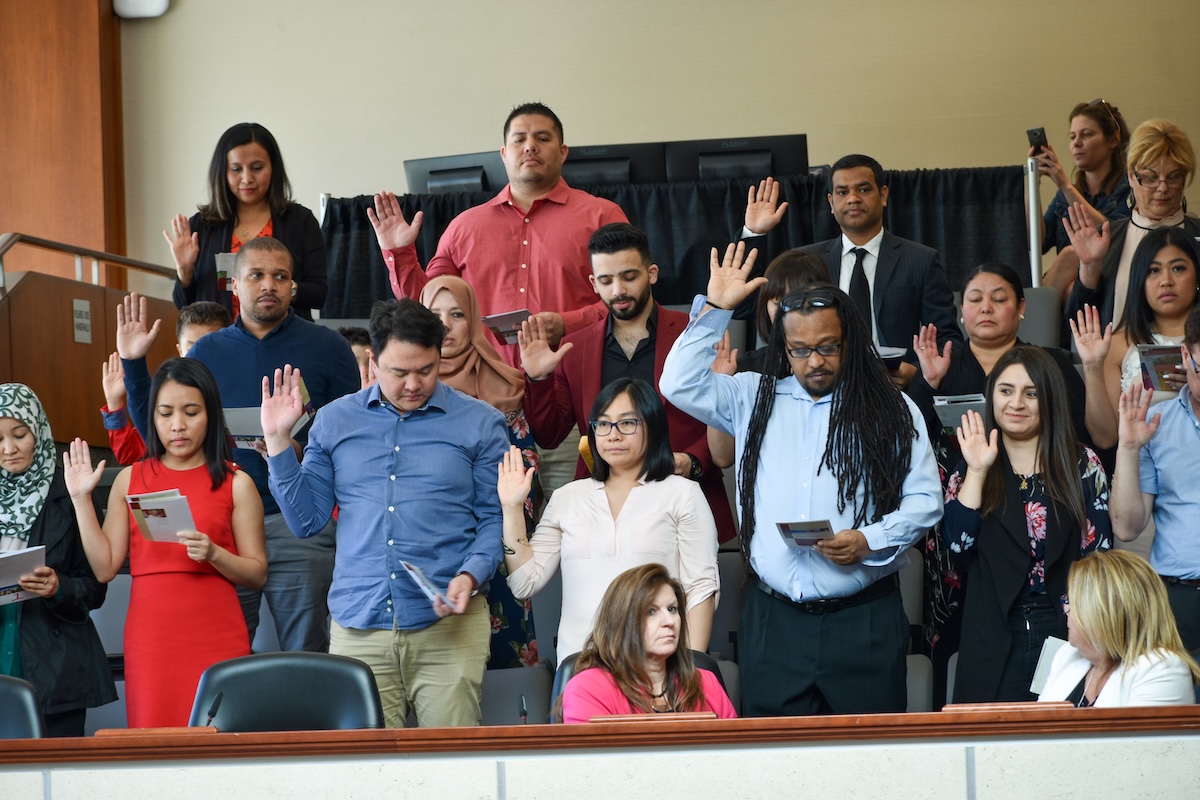
Immigration reform depends on compassion and responsibility.
Reform Begins with Moral Coherence
Catholic Social Teaching does not begin with ideology, party platforms, or policy preferences. It begins with a moral framework rooted in the dignity of the human person — and from that foundation, ordered toward the common good of all.
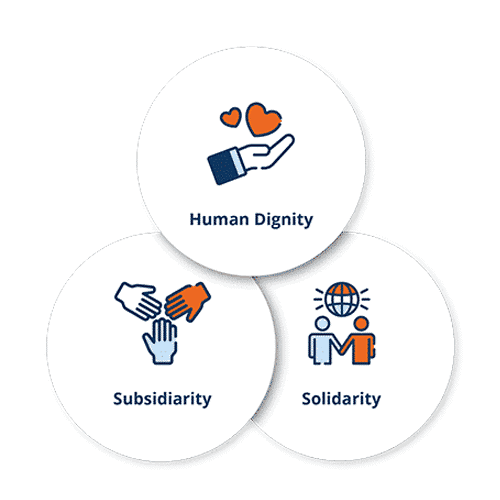
That framework rests on three foundational principles. They are distinct but deeply connected. Human dignity is foundational — the other principles derive their meaning from the human person they are meant to serve. And when all three are properly held together, they produce something that cannot be manufactured by policy alone: the common good.
Human Dignity — every person possesses inherent worth, regardless of legal status. Dignity is not conferred by administrative recognition. It precedes the state and cannot be revoked by it. From this truth, all other rights and obligations flow.
Solidarity — those who live and work among us are not abstractions or political symbols. They are neighbors. As Pope John Paul II wrote, solidarity is “a firm and persevering determination to commit oneself to the common good”. (Sollicitudo Rei Socialis, 38) The moral bonds formed
within communities are real — and ignoring them does not make them disappear.
Subsidiarity — problems are best solved at the most immediate level capable of fulfilling them. What individuals, families, and local communities can accomplish should not unnecessarily be transferred to larger institutions or the state. As Pope Pius XI taught, it is “an injustice and at the same time a grave evil” (Quadragesimo Aanno, 79) to do so. In the context of immigration, subsidiarity reminds us that pastoral accompaniment, legal judgment, civic engagement, and legislative reform each belong to different levels of authority — and that no single level can substitute for another without distorting the whole.
When these three principles are genuinely applied together, the result is the common good: “the sum total of social conditions which allow people, either as groups or as individuals, to reach their fulfillment more fully and more easily”. (Catechism of the Catholic Church, 1906) The common good is never merely the sum of individual interests. It always depends upon a correct understanding of the dignity and rights of the person.
A just immigration system must reflect all three principles. When it produces permanent marginalization, exploitable labor structures, or enduring contradiction between social reality and legal status, the common good is not being served.
Where that coherence breaks down, reform becomes necessary. Not as a political preference. As a moral requirement.
What Immigration Reform Must Accomplish
If the structural contradiction identified in Part 4 is to be resolved, reform must do more than intensify enforcement or expand administrative complexity. It must restore coherence between law, moral responsibility, and lived reality.
That does not require abandoning order. It requires ordering the system toward justice.
A just system should provide realistic legal pathways for long-term residents who have demonstrated responsibility, contribution, and stable integration into society.
It should treat family unity as a central social good—not a secondary consideration that enforcement decisions can set aside.
It should guarantee due process and humane treatment in all legal proceedings, because procedural justice is not a bureaucratic nicety. It is a requirement of dignity.
It should prevent the emergence of a permanent underclass—a system that benefits from labor it refuses to recognize is not serving the common good. It is exploiting a contradiction it has chosen not to resolve.
It should maintain laws that can actually be followed—not merely severe on paper, but realistic and genuinely enforceable. A law that cannot be complied with does not serve the common good; it simply produces more contradiction.
These are not simply policy preferences. They are moral requirements flowing from the dignity of the person, the obligations of solidarity, and the responsibilities of political authority.
The Balance Catholic Social Teaching Refuses to Abandon
Catholic Social Teaching rejects the false choice that dominates much of the immigration debate.
It does not say: compassion or law. It insists on both.
It affirms that nations possess the right to regulate borders, maintain public order, and enforce immigration law. At the same time, it insists that immigrants remain persons—not abstractions, burdens, or political symbols.
Pope St. John Paul II expressed this balance with characteristic clarity:
“The challenge is to combine the welcome due to every human being, especially when in need, with a reckoning of what is necessary for both the local inhabitants and the new arrivals to live a dignified and peaceful life.” (Message for World Day of Peace, 13)
Pope Leo XIV, in his 2025 Message for the World Day of Migrants and Refugees, brought that same balance into the present moment—affirming every nation’s right to determine who enters while insisting that people who have lived good lives for years must still be treated with the dignity they carry as human beings. The right and its limit, stated together.
This is not a compromise. It is a moral synthesis.
A system that treats enforcement as if persons do not matter becomes harsh and morally disordered. A framework that speaks of compassion while dismissing the necessity of law and social order becomes incoherent in a different way.
Catholic Social Teaching refuses both distortions. It calls for a system that is humane in its treatment of persons and serious in its responsibility to the common good.
From Principle to Practice
If these principles are taken seriously, they demand something not only from policymakers, but from citizens, communities, and the Church itself. The traditional “See, Judge, Act” method used in many Catholic lay apostolates offers a useful structure for that response.
1. PERSONAL FORMATION—SEE AND JUDGE
Before we can act effectively, we must align our hearts and minds with the Church’s vision of the human person.
This begins with honest formation—learning what the Church actually teaches and refusing to reduce immigration to partisan instinct or ideological identity. It means praying specifically, using Pope St. John Paul II’s words as a meditation, for policymakers to find the wisdom to hold welcome and the rule of law together. And it means returning, repeatedly, to a truth this series has tried to make clear: documentation does not determine a person’s worth before God.
2. PARISH AND COMMUNITY ENGAGEMENT—ACT
The Church is not only a teacher. It is a community—and the local parish, rightly understood, becomes a place of immediate care and genuine encounter.
In practice this means supporting Catholic legal services that help immigrants navigate the current system. It means creating spaces—a parish potluck, a listening session—where parishioners can hear the lived experiences of those affected. Personal stories bridge gaps that statistics cannot. And it means ensuring that parish ministries—food pantries, baptismal preparation, youth groups—are explicitly open to all, regardless of documentation status. The Church must remain a sanctuary of grace, not a gatekeeper of it.
3. CIVIC ADVOCACY—TRANSFORM
Charity is necessary. But Catholic Social Teaching recognizes that justice requires more—it requires reforming the structures that produce injustice in the first place.
This means advocating for legislation that provides clear, earned pathways to legal status for long-term residents who have demonstrated responsibility and contribution. It means supporting the Church’s teaching on the right not to migrate—the principle that people should not be forced from their homelands by violence, poverty, or persecution, and that international aid and policy should address those root causes directly. And it means calling for administrative reform that makes the legal system efficient enough to actually be followed—because a law that cannot realistically be complied with does not serve the common good.
In this way, charity and justice are not opposed. They are brought into right relationship.
The Final Principle
Throughout this series, one truth has remained constant: The human person is prior to the state.
Law is necessary. Order is necessary. But neither can be understood apart from the dignity they are meant to serve.
Holding these truths together—without collapsing one into the other—is the distinctive contribution of Catholic Social Teaching.
When a legal framework leaves millions in permanent tension—present, contributing, yet without any realistic path toward reconciliation—it does not fully serve the common good.
Immigration reform, then, is not merely political. It is a matter of justice rightly understood.
Until that reform is achieved, one truth must remain clear: our brothers and sisters who lack legal status are not less beloved by God, less worthy of dignity, or less part of our Christian community.
Through faithfulness, honest contribution, care for family, and sincere effort to live in accordance with conscience and moral law, a person can maintain moral integrity—even when their legal status remains unresolved through no fault of their own willingness to comply.
A person’s dignity is not determined by legal status.
What Comes Next?
A moral framework must ultimately prove capable of addressing the hardest questions—not only the easiest ones.
This series has argued that Catholic Social Teaching offers a coherent way to think about immigration: one that upholds both the dignity of the person and the legitimate responsibilities of the political community.
But serious objections remain, and they deserve serious answers.
- Does this framework weaken the rule of law?
- What about fairness to lawful immigrants?
- Are borders still morally necessary?
- Can deportation ever be just?
- Who bears primary responsibility for reform?
The next installment addresses these questions directly—engaging the strongest objections from across the political spectrum through the lens of Catholic Social Teaching.
Next: Hard Questions About Immigration and Catholic Social Teaching



CAPP-USA (Centesimus Annus Pro Pontifice, Inc.) is the United States affiliate of the Vatican-based pontifical foundation of Fondazione Centesimus Annus Pro Pontifice, established by Pope St. John Paul II in 1993 to promote Catholic Social Teaching in fidelity to the Magisterium of the Catholic Church. CAPP-USA is a 501(c)(3) nonprofit organization.