Why Did Pope Leo XIV Vote?
The first pope to vote in a U.S. election offers a lesson about Catholic conscience and the common good.
by CAPP-USA
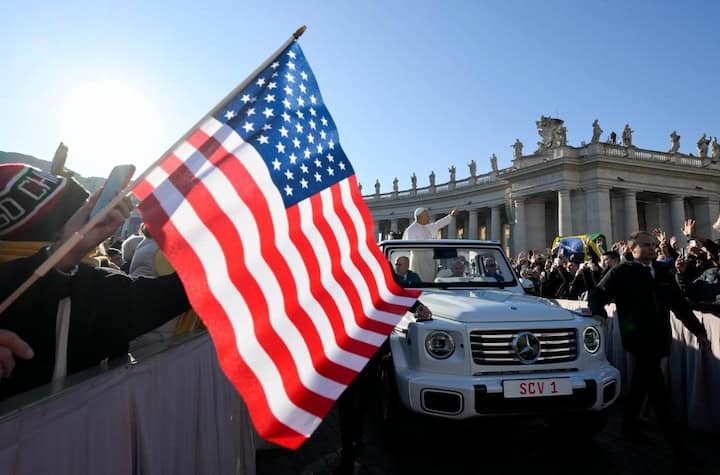
Can a Pope vote in an election? Why did Pope Leo XIV vote?
Can the Pope Vote in an Election?
For the first time in history, a pope has voted in a United States election.
On October 30, the Holy See Press Office confirmed that Pope Leo XIV, a registered voter in Will County, Illinois, had cast a mail-in ballot in the midterm elections. The Chicago-born pontiff requested the ballot from Vatican City on October 3. According to the Vatican, he has “exercised his right to vote as a United States citizen” whenever he was eligible, including during his years as a missionary and bishop in Peru. Can he do that? Yes. Like other U.S. citizens living abroad, the Pope may vote by absentee ballot, even though he is the head of a foreign state, the Holy See.
The headlines treated it as a novelty. Some readers wondered whom he voted for. He has not said, and that is not the interesting question.
The Vatican offered its own explanation:
“The Holy Father expresses his belief in the right and the duty of citizens to participate in democratic processes.” (Holy See Press Office, October 30, 2026)
The Vatican pointed to something more enduring: voting is not merely a privilege of citizenship.
It is a moral responsibility.
Voting Is a Duty, Not Just a Right
The Catechism of the Catholic Church is direct. Because citizens share “co-responsibility for the common good,” it is “morally obligatory” to exercise the right to vote. It lists voting alongside paying taxes and defending one's country. (Catechism of the Catholic Church, 2240)
The paragraph just before explains why. Citizens are called to work with civil authorities for the good of society, in truth, justice, solidarity and freedom. (Catechism of the Catholic Church, 2239)
The Second Vatican Council said the same, and addressed it to all citizens: each should be mindful of the right and 'the duty to use their free vote to further the common good.” (Gaudium et Spes, 75)
Like other civic duties, this one presumes a right to vote, and it can yield to grave circumstances.
But for a citizen who can vote, the Church's expectation is clear.
In other words, the Pope was not sending a political message. He was keeping an obligation.
What Pope Leo XIII Taught: One Life, Not Two
Pope Leo XIV chose his name to honor Pope Leo XIII, the pope who launched modern Catholic Social Teaching with Rerum Novarum in 1891.
Six years earlier, in Immortale Dei, Pope Leo XIII took up a question every Catholic citizen still faces: does faith belong in public life? His answer was blunt. It is “unlawful to follow one line of conduct in private life and another in public.” (Immortale Dei, 47)
Why such strong language? Because living one way in church and another way in public sets a person against himself. Pope Leo XIII called Catholics to be consistent in every condition of life.
A ballot is one of the places where private conviction becomes public action. Catholics are asked to bring the same faith into the voting booth that they bring to Mass, and to carry the same conscience back out.
Yet Pope Leo XIII also drew an important distinction. In the very next paragraph, he recognized that “in matters merely political,” such as the best form of government, Catholics may legitimately disagree. He warned against accusing faithful Catholics of wavering in the faith over such differences. (Immortale Dei, 48)
Fidelity to Church teaching does not require agreement on every public policy. What it requires is a conscience formed by the faith, applied consistently and exercised with respect for others.
More than a century later, Pope Leo XIII's namesake did exactly that.
What the Vote Does Not Mean
It is tempting to read a pope's ballot as a partisan signal. It is not one.
The Pope has not said how he voted. The Church does not endorse candidates or parties. And Catholic Social Teaching is neither liberal nor conservative: it offers warnings to both sides of the political spectrum.
Pope Leo XIV has drawn the circle of concern wide. Respect for human dignity, he told the diplomatic corps, is owed to every person, “from the unborn to the elderly,” and to “citizens and immigrants alike.” (Address to the Diplomatic Corps) No party platform holds all of that.
What the vote does mean is simpler. Pope Francis called politics “one of the highest forms of charity” because it seeks the common good. (Address to Students of the Jesuit Schools of Italy and Albania) A vote is one small, concrete act of that charity: a way of seeking the good of people we will never meet.
The Election Is Over. The Obligation Isn't.
The duty the Catechism describes does not end when the polls close.
Co-responsibility for the common good continues after Election Day. It means working with those now in office, whether we voted for them or not. It also means using what the Catechism calls “the right, and at times the duty, to voice their just criticisms” of what harms human dignity or the good of the community. (Catechism of the Catholic Church, 2238)
And it means the consistency Pope Leo XIII asked for: the same faith in public as in private, at work, in our parishes, and in how we speak about people we disagree with.
The first American pope cast his ballot from Vatican City. For the rest of us, the question is no longer whether we voted. It is whether we will carry the same conscience into the next two years.
RELATED READING
The Role of Laity in Catholic Social Teaching (Part 3)
Pope Leo XIV and Catholic Social Teaching
A Fragmented World: Cardinal Parolin's Address to CAPP-USA