What If Not Giving to the Poor Is Stealing?
by CAPP-USA
5 Radical Lessons from Pope Leo XIV’s Dilexi Te that Flip the Script on Wealth, Poverty, and Faith.
Most of us think of charity as optional. A kind gesture. A good habit. A “nice to have” in a decent life.
But what if that view is not just incomplete—but wrong?
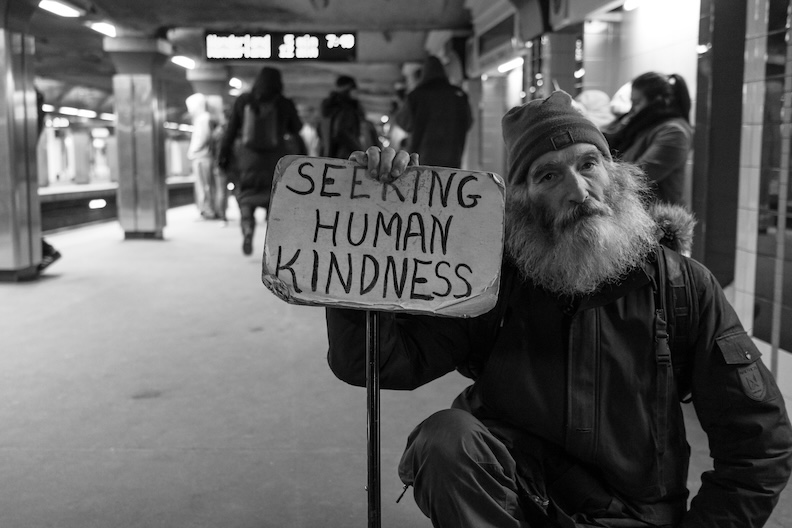
Giving to the poor is not optional. Is the theft to hold onto what we don’t need.
What if, in some cases, keeping your surplus wealth is actually a form of theft?
Dilexi Te (“I Have Loved You”) is Pope Leo XIV’s first Apostolic Exhortation—a formal teaching letter addressed to the entire Church—focused on poverty, justice, and what faith actually demands of us.
Here are five surprising—and perhaps jarring—insights from the text that challenge the very foundation of how we think about wealth.
1. Keeping What You Don’t Need Is Stealing
This may be the most radical claim in the text: Not giving to the poor isn’t just uncharitable—it’s stealing. Drawing on the early Church Fathers, the Pope reminds us of the universal destination of goods. If you possess more than you need for a dignified life while your neighbor lacks the essentials, that surplus doesn’t truly belong to you. As Saint John Chrysostom famously put it:
“Not giving to the poor is stealing from them, defrauding them of their lives, because what we have belongs to them.” (Pope Leo XIV, 42)
In a world obsessed with absolute property rights, this reframes charity from a “paternalistic kindness” into an act of justice.
2. The Church’s Treasure Isn’t in a Vault
We often measure the success of an organization by its balance sheet or its physical assets. In the third century, the Roman authorities made the same assumption. When they demanded that Saint Lawrence hand over the “treasures of the Church,” they expected chests of gold.
Instead, Lawrence presented the city’s poor, the sick, and the suffering.
This isn’t just an uplifting historical anecdote; it’s a direct challenge to our modern value system. It suggests that the true wealth of our community isn’t found in our stock portfolios or the prestige of our institutions, but in our most vulnerable members. They are the “treasures” because they are a “mirror” of Christ and the presence of the divine is uniquely accessible through service to them.
3. Who’s Really Teaching Whom?
In the standard “non-profit” model, there is a clear giver (who has the answers) and a clear receiver (who has the problems). Dilexi Te completely flips this script.
It argues that those living in poverty are not passive objects of our aid—they are active agents who have much to teach us. Their resilience and their reliance on faith offer a “mysterious wisdom” that those of us insulated by comfort often lack.
The takeaway: We aren’t just called to “help” the poor; we are called to be evangelized by them. Genuine charity becomes a mutual relationship where the person “giving” often ends up receiving the greater spiritual lesson. Not giving to the poor also means not receiving from them.
4. Poverty Evolves: What Counts as “Poor” Today?
What does it mean to be poor today? It’s not just about a fixed dollar amount. The text argues that poverty is dynamic—it’s measured by what a person needs to participate in society:
- Then: A century ago, lacking electricity wasn’t “poverty.”
- Now: Lacking digital access or reliable energy can mean exclusion from modern life.
Today, lacking reliable internet access can mean exclusion from education, employment, healthcare, and even basic civic participation. In this sense, digital access is no longer a luxury—it is part of the conditions for human dignity.
By defining poverty as being “excluded from the minimum acceptable way of life,” the Church forces us to look at the concrete historical period we live in. It keeps our understanding of justice relevant in a rapidly changing world.
5. Faith Without the Poor Is Empty Talk
The final point is the most foundational: You cannot separate your relationship with God from your relationship with the poor. Not giving to the poor means not giving to God. “To the extent that you did not do it for one of the least of these, you did not do it for Me.” (Mt 25:45)
Dilexi Te warns that when we ignore the cry of the poor we will eventually “drift into a spiritual worldliness camouflaged by religious practices.” (Pope Leo XIV, 113) Without action, our faith becomes “empty talk.”
As Pope Francis puts it: there is an inseparable bond. (Pope Leo XIV, 36) This isn’t about adding social work to your to-do list; it’s about realizing that justice for the poor is the primary way we live out our faith in the real world.
The takeaway: We aren’t just called to “help” the poor; we are called to be evangelized by them.
Conclusion: A Dream That Can Come True?
The text ends with a reflection on the Good Samaritan. We don’t get to choose if we encounter the “beaten man” on the side of the road; we only get to choose how we respond.
After reading this, the question is no longer theoretical. We are already in the story.
The wounded man is not hypothetical. He exists—in our city, our parish, our daily life.
The only question is:
Do I pass by—or do I stop?



CAPP-USA (Centesimus Annus Pro Pontifice, Inc.) is the United States affiliate of the Vatican-based pontifical foundation of Fondazione Centesimus Annus Pro Pontifice, established by Pope St. John Paul II in 1993 to promote Catholic Social Teaching in fidelity to the Magisterium of the Catholic Church. CAPP-USA is a 501(c)(3) nonprofit organization.