Marxism vs. Catholic Social Teaching: Where They Overlap—and Why They Ultimately Clash
by CAPP-USA
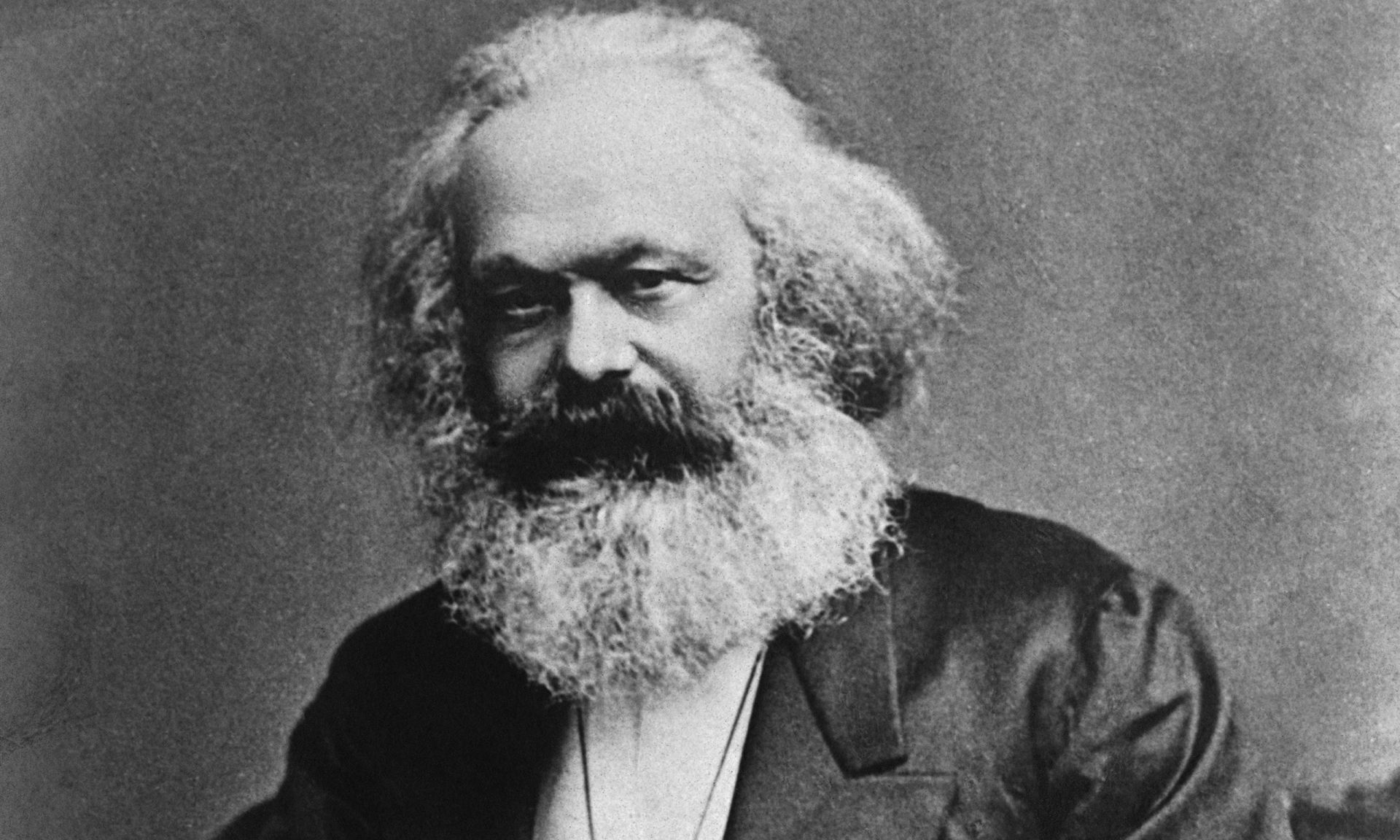
Who is Karl Marx?
Karl Marx was more than a philosopher; he was a revolutionary. His lofty goal was to set the common man free from the oppression and suffering caused by a harsh, capitalist system.
Basically, “[t]he Marxist program…sees in class struggle the only way to eliminate class injustices in society and to eliminate the classes themselves.” (Pope St. John Paul II, 11)
His writings include the Communist Manifesto (1848) and Das Kapital (1867) and form the basis for Marxist socialism and communism.
Marxism vs. Catholic social teaching.
What is Marxism?
Marxism was a response to the great disparity in wealth and suffering caused by the abuses of capitalism in the 19th Century. It positions socialism as the transition between capitalism and communism – wherein ‘all would own all for the benefit of all – equally’.
Under this philosophy, the state owns and regulates the means of production and distribution of goods. People then share equally in the outputs of the system, according to their need.
Read more about the Church’s consistent opposition here
Marxism and the Catholic Church: The Surprising Overlap
The Church agrees this is an appealing goal! In fact, the Magisterium has noted that socialism often mimics Christian ideals.
For example, both Marx and Pope Leo XIII in Rerum Novarum condemned the degrading working conditions of industrial capitalism—12-hour factory shifts, child labor, starvation wages.
So, at the level of intention — concern for the poor, opposition to exploitation, and the desire for social justice — there is real overlap.
- “Socialism inclines toward and in a certain measure approaches the truths which Christian tradition has always held sacred”. (Quadragesimo Anno, 113)
- So much so that Marx’s ideas “will no longer differ from the desires and demands of those who are striving to remold human society on the basis of Christian principles”. (Pope Pius XI, 114)
Pius XI acknowledged that moderate forms of socialism had moved closer to Christian concerns by abandoning extremes—but he firmly concluded that socialism, even moderated, remains incompatible with Catholic truth because of its flawed view of society and the human person.
The Fundamental Conflict: A Tale of Two Worldviews
Despite these similarities of goals, their differences lie fundamentally in “their respective visions of man”. (Pope Benedict XVI) At the level of intentions, there can be real overlap — but at the level of the human person, the divide is fundamental:
| FEATURE | MARXISM | CATHOLIC SOCIAL TEACHING |
| View of the Person (Anthropology) | An economic being (materialist); a part of a class. | A child of God with inherent dignity; a soul with free will. |
| Social Driver | Class Struggle: Progress comes through conflict. | Solidarity & Charity: Progress through communion and cooperation. |
| Means to Change | Dialectical Materialism: Revolution and overthrow of the existing order. | Conversion of Hearts: Structural reform via solidarity and subsidiarity. |
| Property | Private property is the root of oppression. |
Private property is a right with a “social mortgage.” |
| Role of the State | The State owns/regulates all production. | Subsidiarity: The State supports local initiative. |
| The “Problem” | The System is broken (Capitalism). | Sin is the root: persons and social structures both need healing. |
| Ultimate Hope (Eschatology) | The Communist Revolution/Workers’ Paradise. | The Kingdom of God/Redemption in Christ. |
The “Anthropological Error”
Karl Marx’s greatest error was anthropological. While he described the situation of his time with great precision, he forgot what a human being actually is.
What does this mean in plain English? Marx ultimately treated human beings as economic units to be managed. He believed that if you fix the external environment—the economy, the housing, the wages—then humans would automatically be happy and virtuous.
Pope Benedict XVI explained the failure of this logic:
“[H]is error lay deeper. He forgot that man always remains man. He forgot man and he forgot man’s freedom. He forgot that freedom always remains also freedom for evil. He thought that once the economy had been put right, everything would automatically be put right.” (Spe Salvi, 21)
Why Marxism Can’t Mix with Christianity
These philosophical differences have concrete consequences. Even before the catastrophic experiences of the U.S.S.R., Cuba, North Korea, and China, Catholic social teaching rejected socialism on principled grounds.
- It is Unjust: In 1891, Pope Leo XIII called Marx’s proposals “emphatically unjust” because they “would rob the lawful
possessor, distort the functions of the State, and create utter confusion in the community.” (Rerum Novarum, 4) - It is Atheistic: Marx argued the question of God was incoherent. Pope St. Paul VI noted that a Christian cannot adhere to “atheistic materialism” or a “dialectic of violence” that absorbs individual freedom into the collective. (Pope St. Paul VI, 26)
- It is Anthropologically Incomplete: “It is not possible to understand man on the basis of economics alone.” (Pope St. John Paul II, 24)
“Religious socialism, Christian socialism, are contradictory terms; no one can be at the same time a good Catholic and a true socialist.” (Quadragesimo Anno, 120)
Charity vs. Justice
One of Marxism’s most enduring critiques of Christianity concerns the very meaning of charity itself. Marxists often raise an objection: The poor do not need charity; they need justice. They argue that “almsgiving” is just a way for the rich to soothe their consciences.
Catholic Social Teaching responds:
- Justice is the base: “It is true that the pursuit of justice must be a fundamental norm of the State.” (Pope Benedict XVI, 26)
- Love is the completion: “There is no ordering of the State so just that it can eliminate the need for a service of love.” (Pope Benedict XVI, 28)
Why? Because humans experience unique, unrepeatable suffering that bureaucratic justice can’t address.
The Basis of a “Christian Economic System”
Catholic social teaching does not propose a technical economic system, but a moral and anthropological framework for economic life. So, if Marxism isn’t the answer, what is?
The Church points toward an economy that is open to the Absolute and that recognizes both human dignity and human limitation.
- Ethics First: The economic sphere must be structured and governed in an ethical manner. (Pope Benedict XVI, 36)
- Markets with a Purpose: The free market can be an efficient tool, but it must remain ordered to the human person — “money must serve, not rule.” (Pope Francis)
- The Common Good: Wealth creation must benefit the many, not just the few. “Free and disinterested solidarity is the key to the smooth functioning of the global economy.” (Pope Francis)
BOTTOM LINE
Marxism fails not because it seeks justice, but because it misunderstands the human person.
“[T]he various grave economic and political challenges facing today’s world require a courageous change of attitude that will restore to the end (the human person) and to the means (economics and politics) their proper place.” (Pope Francis)
Reflect & Discuss: Marxism failed by reducing the human person to material conditions. In what ways do you see our modern consumerist culture making the same mistake today?




CAPP-USA (Centesimus Annus Pro Pontifice, Inc.) is the United States affiliate of the Vatican-based pontifical foundation of Fondazione Centesimus Annus Pro Pontifice, established by Pope St. John Paul II in 1993 to promote Catholic Social Teaching in fidelity to the Magisterium of the Catholic Church. CAPP-USA is a 501(c)(3) nonprofit organization.