The Overpopulation Myth
This series argues that the modern fear of overpopulation rests on a flawed understanding of the human person. The Church proposes a different diagnosis: the real crisis is not too many people, but too much consumerism, and too little integral human development. It is written for readers concerned about ecology, development, and human dignity — especially those who have been told these goals are in conflict.
PART 2
Is the World Overpopulated?
by CAPP-USA
What Actually Happened: The Data
While “the world-wide population situation is very complex”, (Pope St. John Paul II, 1) several broad and measurable trends show that the global picture looks very different from what mid-twenty century “population alarmists” predicted.
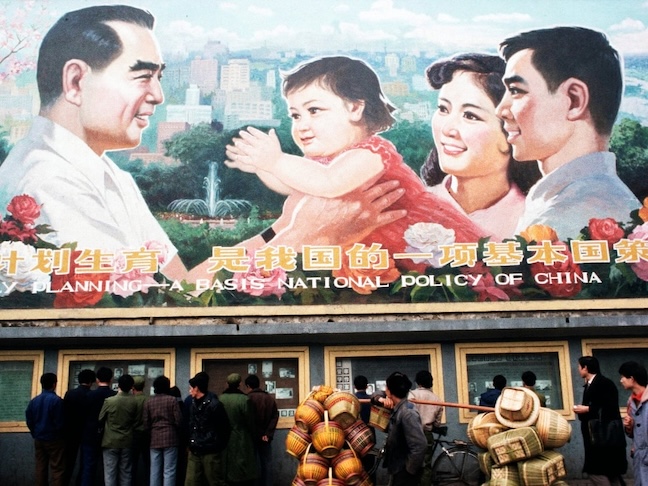
Is the world overpopulated? No. But even disastrous efforts like China’s one child policy couldn’t stop human ingenuity from solving problems.
POPULATION TRENDS
- Declining Fertility Rates: The global fertility rate has fallen dramatically—from about 5 children per woman in 1950 to roughly 2.3 today. Many nations are now below the replacement level of 2.1, signaling a future of slower growth and, in many places, population decline.
- Population Peak and Decline: The global population growth rate continues to slow. According to the United Nations, humanity will likely peak around 2080 at about 10.3 billion before beginning a gradual decline. (World Population Prospects)
- Aging Populations: Falling birth rates and longer lifespans mean aging societies. By the mid-2080s, people aged 65 and older are expected to outnumber children under 18—a reversal without precedent in human history.
THE REAL THREAT: THE DEMOGRAPHIC IMPLOSION
While the mid-20th century feared a ‘population explosion,’ the 21st century faces a ‘demographic implosion.’ As fertility rates fall below the replacement level of 2.1 in nearly every developed nation, we are entering a world where those over 65 will soon outnumber children under 18. This is a reversal without precedent.
This ‘Aging Crisis’ is not an environmental victory; it is a profound social challenge. It creates a society without enough young ‘hands to work and minds to innovate,’ straining the ability of communities to care for the vulnerable. We must shift our concern from ‘too many people’ to the reality of ‘too few people’ to sustain the intergenerational solidarity that a healthy society requires.
But did population growth—before it slowed—cause the predicted catastrophes? Let’s examine the multiple outcomes.
Economic Outcomes: Prosperity, Not Poverty
The doomsday forecasts of mass poverty and famine have proven dramatically wrong.
Rising Incomes. Between 1960 and 2016, the world’s population grew by 145%. (World Bank) Yet over the same period, real average annual per-capita income rose by 183%. (World Bank)
Declining Poverty. Instead of more poverty, the world experienced the greatest poverty reduction in history. Extreme poverty fell by 90% since 1990. (World Bank) Hundreds of millions were lifted out of extreme deprivation as economies expanded, technology advanced, and human cooperation deepened.
This data tells a profoundly different story: When human creativity is unleashed, population growth can coincide with unprecedented improvements in well-being.
Nobel laureate Angus Deaton makes the same empirical point from outside any religious framework: “Economic development, when it happens, has always been associated with dramatic improvements in health, longevity, and material well-being.” (Deaton, Angus. The Great Escape: Health, Wealth, and the Origins of Inequality. Princeton University Press, 2013.)
As the Catholic economist Stefano Zamagni has noted, economic life—when rightly ordered—becomes “a sphere of reciprocal gift and creativity,” not zero-sum competition. This affirms the Church’s conviction that human enterprise, guided by moral responsibility, contributes to integral human development.
But what about the China challenge—the argument that population control caused prosperity?
China and the One Child Policy: Correlation Is Not Causation
Any discussion of population and prosperity must address China. Between 1980 and 2020, China experienced the most dramatic poverty reduction in human history—while enforcing the world’s strictest population control policy. Doesn’t this prove that limiting births drives prosperity?
No. It proves that correlation is not causation.
What Actually Happened: China’s economic takeoff began in 1978 with Deng Xiaoping’s market reforms—unleashing entrepreneurship, opening trade, and allowed millions of farmers to move to cities and factories. The one-child policy, implemented in 1980, came after economic growth had already begun.
The Real Pattern: China’s neighbors achieved similar prosperity without coercion:
- South Korea industrialized rapidly while fertility declined through education and urbanization
- Taiwan became wealthy with voluntary family planning
- Vietnam saw rapid poverty reduction with higher fertility rates than China
What drove success wasn’t population control but economic liberalization, investment in education, infrastructure development, and global market integration.
Meanwhile, China’s one-child policy inflicted enormous costs:
- Demographic crisis: China now faces rapid aging with too few workers to support retirees—a collapse that will strain its economic and social system.
- Gender catastrophe: Sex-selective abortions created a severe shortage of women, with an estimated 30-40 million “missing girls.” This has led to social instability, trafficking, and a generation of men unable to marry.
- Human rights violations: Forced abortions, sterilizations, and the destruction of families.
- Cultural trauma: The policy tore at the fabric of Chinese society, severing traditional family structures and leaving lasting psychological scars.
China succeeded economically despite these costs, not because of them.
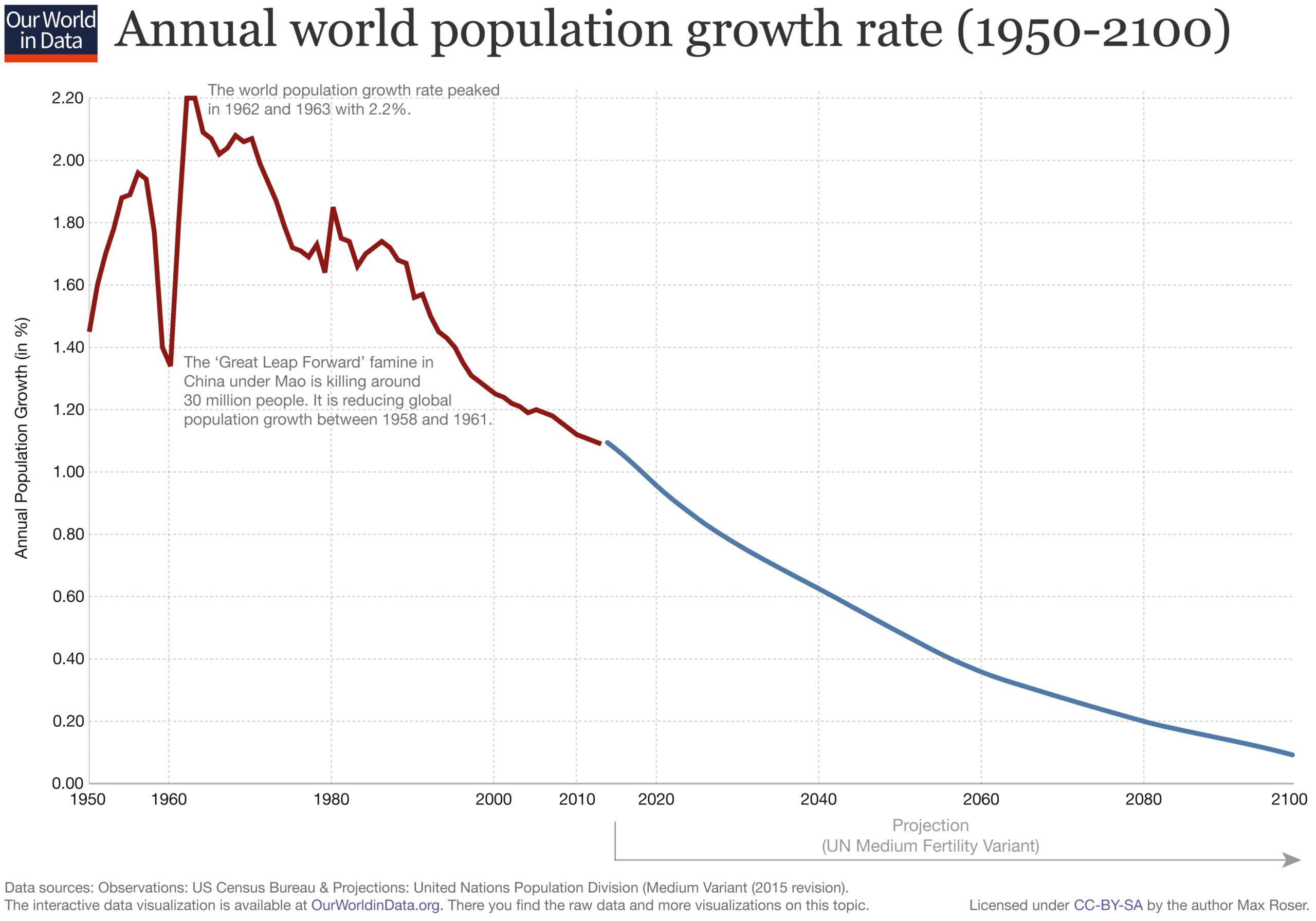
The world is not overpopulated. It’s contracting due to declining fertility rates.
As Pope Benedict XVI teaches, “To consider population increase as the primary cause of underdevelopment is mistaken… Populous nations have been able to emerge from poverty thanks not least to the size of their population and the talents of their people”. (Caritas in Veritate, 44)
China’s story doesn’t disprove the Church’s vision—it confirms what happens when societies treat people as economic units rather than persons with inherent dignity.
Having established that population growth coincided with prosperity rather than poverty, let’s examine another dimension of the alarmist predictions: resources and environment.
Food and Resources: Innovation Outpaced Growth
Alarmists predicted that population growth would rapidly deplete natural resources: “Given present resource consumption rates and the projected increase in these rates, the great majority of currently nonrenewable resources will be extremely expensive 100 years from now.” (Limits to Growth)
But the opposite has occurred.
- Food Production: Global calories per person rose 30% since 1968. The famines Ehrlich predicted never materialized. The Green Revolution—through improved seeds, irrigation, and farming techniques—allowed food production to outpace population growth, preventing the mass starvation once deemed “inevitable.”
- Resource Prices: Most commodities tracked by the World Bank are cheaper today—either in absolute terms or relative to income. (World Bank) Prices, which reflect scarcity, have generally declined, suggesting that human ingenuity and market adaptation have outpaced depletion.
- The Pattern of Innovation: When resources grow scarce, prices rise—and people respond. Consider whale oil: in the 1800s, it was the primary fuel for lamps. As whales grew scarce and prices rose, we didn’t run out of light. Instead, we discovered kerosene, then invented electric lighting. Today, LED bulbs use 90% less energy than their predecessors.
This pattern repeats across industries:
- Fiber optics replacing copper for communications
- Hydraulic fracturing unlocking vast new energy reserves
- Precision agriculture increasing crop yields while reducing water and fertilizer use
- Vertical farming producing food in urban settings with minimal land
The Ultimate Resource: The Human Mind
Economist Julian Simon, who famously challenged Paul Ehrlich, summarized the flaw this way: “The ultimate resource is people — skilled, spirited, and hopeful people who will exert their wills and imaginations for their own benefit and so, inevitably, for the benefit of us all.” (Julian L. Simon, The Ultimate Resource 2, Rev. ed. (Princeton, NJ: Princeton University Press, 1998))
The Church gives language to this pattern: when human freedom is joined to moral purpose, innovation becomes a form of stewardship—a way of cooperating with God’s providence to creation fruitful for all. As Pope St. John Paul II taught, “Man, created in the image of God, participates by his work in the work of the Creator, and continues…to develop and complete it.” (Laborem Exercens, 25)
But what about pollution and environmental degradation? Here the picture becomes more complex—and demands our careful attention.
Pollution: A Nuanced Picture
Higher population levels were once predicted to generate uncontrollable pollution and waste, overwhelming the planet’s ability to recover.
The real story is more nuanced: outcomes vary dramatically between developed and developing nations, and human innovation—when guided by sound policy and moral purpose—has made decisive progress in some areas while other challenges persist.
DEVELOPING NATIONS: A STORY OF IMPROVEMENT
Since the 1970s, strong environmental laws, public awareness, and technological innovation have yielded remarkable results:
- Airborne Lead and Sulfur Dioxide: Dramatically reduced through catalytic converters and industrial regulations.
- Water Pollution: Industrial and sewage discharges are now tightly regulated in developed nations, restoring rivers once declared “dead.”
- Ozone Layer: The 1987 Montreal Protocol reversed ozone depletion, one of the century’s greatest environmental successes.
These improvements are not accidental; they follow a consistent pattern. When human creativity serves the common good, environmental protection becomes an act of justice and solidarity.
DEVELOPING NATIONS: THE ONGOING CHALLENGE
In much of the developing world, population growth and rapid urbanization have produced environmental challenges once seen in industrialized nations:
- Air Pollution: Concentrations of particulate matter in cities often far exceed safe limits.
- Water Contamination: Insufficient wastewater treatment leaves rivers and coasts polluted.
China is a mixed bag. It has achieved local improvements through strict controls and industrial restructuring. Yet, these successes came at high cost and with continuing global consequences — especially in greenhouse gas emissions.
Here again, the Church reminds us that ecological degradation is not simply a “population” issue but a question of justice: the poor suffer most from pollution they did not cause. “The environment is a collective good, the patrimony of all humanity,” warns Pope Francis, “and the responsibility of everyone”. (Laudato Si, 95)
Two Persistent Global Problems
Despite real progress, two global forms of pollution have worsened since the 1970s. Greenhouse gas emissions, driven by economic growth and industrialization, have nearly doubled since 1970. (EPA) Plastic pollution has also surged: roughly half of all plastic ever produced has been made in
just the past fifteen years, while recycling continues to lag far behind.
Yet the story does not end in despair. Scientists and entrepreneurs are developing biodegradable materials, plastic-degrading enzymes, and chemical processes that can break down existing waste.
These are not merely technical achievements. They are expressions of humanity’s ongoing participation in creation. As Pope Benedict XVI observed, technological development can enable us to exercise responsible stewardship of the Earth. (Caritas in Veritate, 50)
Greenhouse gas emissions, however, merit special attention. Climate change is both urgent and contested — and so we address it directly.
An Environmental Challenge: Greenhouse Gas Emissions & Climate Change
The near doubling of greenhouse gas emissions since 1970 has coincided with a rise in global average temperature of approximately 1.2°C above pre-industrial levels.
Does this mean the world is overpopulated?
ACKNOWLEDGING THE REALITY
The Catholic Church unequivocally affirms our responsibility to care for our “common home.” (Environmental Degradation) Care for creation is not optional; it is a moral obligation rooted in love of God and neighbor.
For this reason, terms such as “climate action” and “climate justice” can be meaningful — when they are properly understood within the framework of Catholic social teaching. Climate justice, rightly understood, is an act of faith and a work of mercy. It seeks the Common Good by protecting the poor, the vulnerable, and future generations from environmental harm.
Pope Francis’s 2015 encyclical Laudato Si remains one of the most urgent and comprehensive treatments of ecological degradation in our time. The Church insists that environmental concern is not a political fashion, but a moral imperative.
But diagnosis matters. Is climate change driven primarily by the number of people — or by the patterns of consumption, production, and inequality that shape how some people live?
At A Glance
PART 2 — Is the World Overpopulated? What the Data Show
What we’ve seen:
- Global population growth has coincided with rising life expectancy, falling extreme poverty, and expanding food production.
- Scarcity has been overcome not by fewer people but by better knowledge, technology, and institutions.
- The human person is not merely a consumer of resources but the creator of them.
What comes next:
- If population is not the problem, what is? We now turn from numbers to norms.
Read Part 1: The Malthusian Theory, Paul Ehrlich, and Other Failed Predictions
Read Part 3: Missing the Real Problem: Consumerism and Overconsumption




CAPP-USA (Centesimus Annus Pro Pontifice, Inc.) is the United States affiliate of the Vatican-based pontifical foundation of Fondazione Centesimus Annus Pro Pontifice, established by Pope St. John Paul II in 1993 to promote Catholic Social Teaching in fidelity to the Magisterium of the Catholic Church. CAPP-USA is a 501(c)(3) nonprofit organization.