Human Dignity
Living in Moral Integrity
The Rights of Immigrants and the Rights of Nations
There Must Be a Path to Reconciliation
Moral vs. Legal
“Every country has a right to determine who and how and when people enter”.
Pope Leo XIV
“…albeit always in safeguarding respect for the dignity of each human person”.
Pope Benedict XVI
Catholic Teaching on Law, Morality, and Undocumented Immigrants
Immigration is one of the most polarizing issues in American public life, and much of the debate collapses complex legal, moral, and political questions into oversimplified narratives.
Amidst this complexity, one fundamental question often emerges for those seeking moral clarity:
If someone entered or stayed in the United States illegally, have they committed a serious sin?
The answer is not a simple yes or no.
U.S. immigration law is complicated—and often contradictory—Catholic social and moral teaching is nuanced, and real human lives hang in the balance.
Catholic Teaching on Law, Morality, and Undocumented Immigrants
Immigration is one of the most polarizing issues in American public life, and much of the debate collapses complex legal, moral, and political questions into oversimplified narratives.
Amidst this complexity, one fundamental question often emerges for those seeking moral clarity:
If someone entered or stayed in the United States illegally, have they committed a serious sin?
The answer is not a simple yes or no.
U.S. immigration law is complicated—and often contradictory—Catholic social and moral teaching is nuanced, and real human lives hang in the balance.
The Legal Distinction Most People Get Wrong
U.S. immigration laws operate on two distinct tracks: civil and criminal. This dual structure is a source of considerable confusion and has significant practical implications.
Why This Matters
A single person can face both tracks at once—civil removal for unlawful presence and criminal charges for how they entered. This dual nature creates confusion and has significant implications for how we evaluate moral responsibility.
Additionally, civil violations are not crimes and the differences in rights and procedures between civil and criminal tracks create confusion and hardship.

Civil Violations
Most violations of immigration status are civil matters. These include:
- Overstaying a visa
- Working without authorization
- Being present in the U.S. without proper documentation
These are not crimes. They are handled in immigration court. The penalty is usually deportation, not jail. There is no right to a free attorney.
Criminal Violations
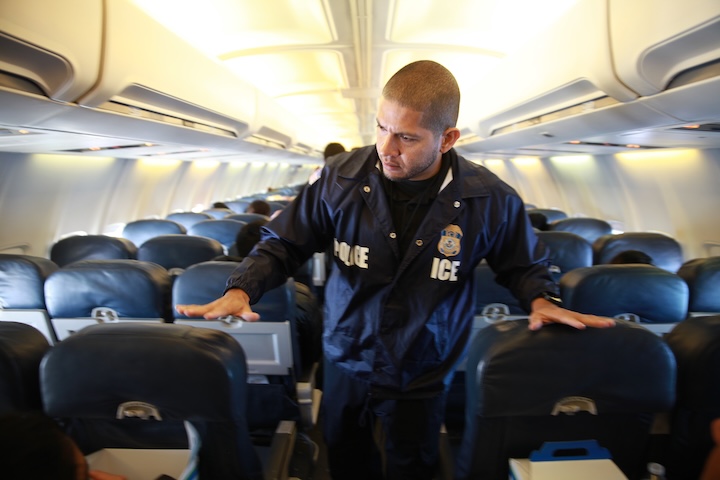
- Improper entry (first offense is a misdemeanor) 8 U.S.C. 1325
- Illegal reentry after removal (felony)
- Immigration fraud (e.g., marriage or document fraud).
- Human trafficking or smuggling
- Harboring undocumented individuals
These are prosecuted in federal criminal courts and can result in imprisonment.
For more background, see: The President and the Pope
In Summary
| Feature | Civil Immigration Track | Criminal Immigration Track |
| Typical Violations | Overstaying visa, unauthorized work. | Illegal entry (8 U.S.C. 1325), reentry, fraud. |
| Court System | Immigration Court (DOJ). | Federal District Court. |
| Consequences | Deportation/Removal. | Fines, Prison, + Deportation. |
| Constitutional Rights | Limited (No right to appointed counsel). | Full (Right to an attorney, jury trial) |
The Church’s “Yes/And” Teaching
Catholic social teaching on immigration rests on two complementary truths.
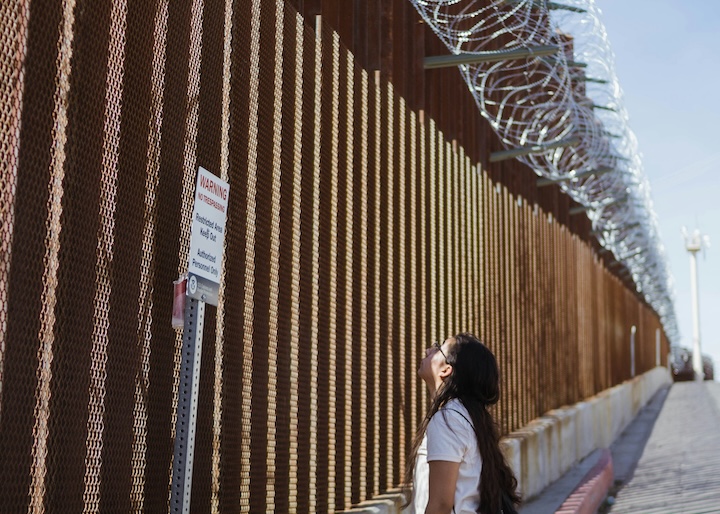
CST is not “open borders.” Nor is it “closed borders.” The Church acknowledges both the right to migrate and the responsibility to regulate migration. Catholic Social Teaching never chooses between compassion and the rule of law. It insists on both.
Yes — People have the right to migrate.
“The right of persons to migrate – as The Pastoral Constitution of the Church Gaudium et Spes, No. 65, recalled – is numbered among the fundamental human rights”. (Pope Benedict XVI)
And — Nations have the right to regulate migration.
“Every country has a right to determine who and how and when people enter,” (Pope Leo XIV)
Pope St. John Paul II taught that “The exercise of such a right is to be regulated, because practicing it indiscriminately may do harm and be detrimental to the common good of the community that receives the migrant”. (Message for World Day of Migration, 3)
Pope Benedict XVI similarly noted that “every state has the right to regulate migration and to enact policies dictated by the general requirements of the common good, albeit always in safeguarding respect for the dignity of each human person” (Message for World Day of Migrants)
The Church refuses the false choice. We must defend both human dignity and ordered migration. These principles reflect CST’s commitment the common good.
For more Church sources, see: (Immigration Quotes from the Church)
When Breaking Immigration Law Is Not (or Is Less) Sinful
St. Thomas Aquinas taught that in cases of extreme necessity, a person may take what is not legally his because “in cases of need all things are common property”. Taking what one needs for survival is not theft—necessity suspends the normal property right. (St. Thomas Aquinas, Summa Theologica II-II, Q. 66, Art. 7)
(Learn more at Universal Destination of Goods)
The Church applies this principle to immigration by pointing out: when a law obstructs survival, the moral responsibility shifts.
The Catechism applies the same logic to civil authority: citizens are not obliged in conscience to obey directives “contrary to the demands of the moral order” (CCC 2242) and recognizes a distinction between objective wrongdoing and subjective culpability. (CCC 1857-1860)
Therefore, when immigration law stands between a person and life, safety, or the basic necessities of his family, the moral culpability for violating that law is greatly diminished—and in true cases of necessity can be absent altogether.
But Necessity Must Be Genuine
This principle applies only when the necessity is real and grave:
- Fleeing violence or persecution
- Escaping conditions that threaten life
- Seeking the means to feed one’s family when no option exists at home
The further a person is from genuine necessity, the less this moral mitigation applies.
When Breaking Immigration Law Is Not (or Is Less) Sinful
(Learn more at Universal Destination of Goods)
The Church applies this principle to immigration by pointing out: when a law obstructs survival, the moral responsibility shifts.
The Catechism applies the same logic to civil authority: citizens are not obliged in conscience to obey directives “contrary to the demands of the moral order” (CCC 2242) and recognizes a distinction between objective wrongdoing and subjective culpability. (CCC 1857-1860)
Therefore, when immigration law stands between a person and life, safety, or the basic necessities of his family, the moral culpability for violating that law is greatly diminished—and in true cases of necessity can be absent altogether.
But Necessity Must Be Genuine
This principle applies only when the necessity is real and grave:
- Fleeing violence or persecution
- Escaping conditions that threaten life
- Seeking the means to feed one’s family when no option exists at home
The further a person is from genuine necessity, the less this moral mitigation applies.
Real-Life Immigration Scenarios: Applying Catholic Teaching
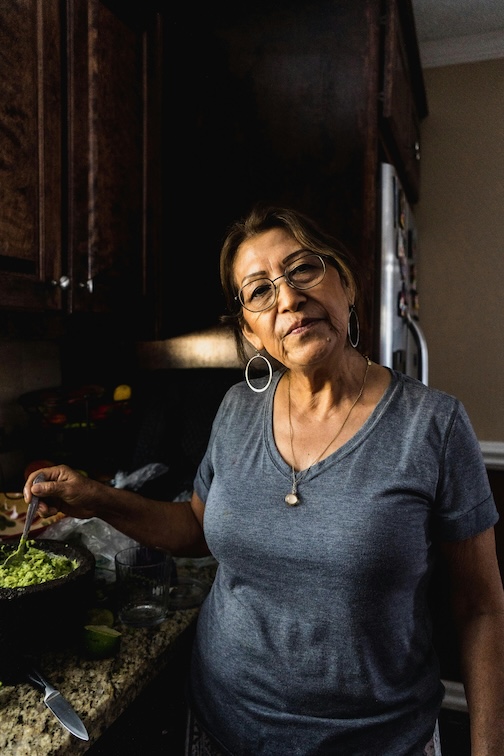
Maria — The Mother Fleeing Violence
Maria lived in rural Honduras where gang violence had already killed her husband. The gangs threatened to recruit her 14-year-old son or kill him. Local police were either powerless or complicit. She crossed the border illegally with her children.
Catholic moral analysis: Maria faced a genuine threat to life. Her illegal entry carries minimal or no moral culpability because she was acting under extreme necessity to protect her children—a fundamental moral duty. She should seek asylum and legal pathways, but her entry itself was not sinful given the circumstances.

Carlos — The DACA Recipient
Carlos was brought to the United States by his parents at age 3. He’s now 25, has a college degree, works as a teacher, and has never known life in Mexico. He’s lived his entire conscious life in the U.S. His legal status remains precarious.
Catholic moral analysis: Carlos bears no moral responsibility for his parents’ decision to bring him here. He has fulfilled his moral obligations by contributing to society, respecting just laws, and seeking legal pathways (through DACA). His “illegal” status is a legal category, not a moral failing. The system that offers him no permanent path forward fails in justice.

Roberto — The Economic Migrant
Roberto came from a region with widespread poverty but no immediate threat to life. Legal pathways were unavailable, but his family was not starving. He crossed illegally to earn better wages and send money home.
Catholic moral analysis: This is the most complex case. Roberto’s situation involves genuine economic hardship but not extreme necessity. His illegal entry carries moral weight, though mitigated by:
- The lack of legal alternatives
- His intention to support family
- His subsequent conduct (working honestly, contributing to community)
Read More
He has moral obligations to seek legal status if possible and to live virtuously. The degree of moral culpability depends on the severity of his family’s need and whether legal options truly existed.
The Church also encourages the state to create a better “line” for people like him.

Elena — Twenty Years of Integration
Elena entered illegally 20 years ago. She has since married a U.S. citizen, raised three citizen children, worked continuously, paid taxes, and been an active parish member. She now faces potential deportation with no path to legal status.
Catholic moral analysis: Even if Elena’s original entry carried moral fault (depending on her circumstances), she has since:
- Fulfilled her obligations to contribute to the common good
- Built deep ties of solidarity with her community
- Raised children who are fully American
Read More
The system that offers no path to reconciliation after two decades of positive integration fails both Elena and the common good. Catholic teaching would support legal reform creating a pathway for people in Elena’s situation.
A Deeper Dive into Elena’s Story
Why Long-Term Integration Creates Moral Claims
Elena’s case raises a crucial question: Does twenty years of presence and contribution create a moral claim to legal recognition—even if the original entry was unlawful?
Catholic Social Teaching suggests yes, for several reasons rooted in fundamental principles:
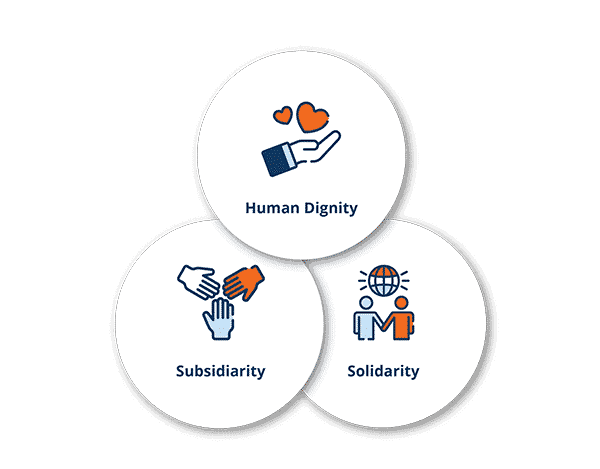
THE PRINCIPLE OF SOLIDARITY
Solidarity recognizes that we are bound together in genuine relationships of mutual obligation. When someone has lived, worked, worshipped, and raised children alongside us for decades, they have become part of the social fabric. The Catechism teaches that solidarity is “a firm and persevering determination to commit oneself to the common good”. (CCC, 1942) Elena has demonstrated this commitment through twenty years of contribution.
The political community cannot treat these bonds as if they don’t exist. Solidarity works both ways: just as Elena has obligations to her community, the community has developed obligations toward her.
THE RIGHTS OF CHILDREN
- Separate citizen children from their mother (a grave harm), or
- Effectively exile citizen children to a country they’ve never known
Neither outcome serves justice or the common good. The children’s rights create corresponding duties for the state.
THE COMMON GOOD AND PARTICIPATION
- Contributed economically through work and taxes
- Participated in civil society through her parish and community
- Raised the next generation of citizens
- Developed relationships of reciprocal obligation with neighbors, coworkers, and fellow parishioners
CST teaches that the common good requires “the social conditions which allow people to reach their full potential”. (CCC, 1906) A system that permanently excludes long-term, contributing members from legal recognition fails to serve the common good—it creates a vulnerable underclass that can neither fully contribute nor claim basic protections.
THE PRINCIPLE OF SUBSIDIARITY
TIME AND THE POSSIBILITY OF REDEMPTION
THE STATE'S OWN COMPLICITY
This creates a kind of administrative estoppel: the state cannot accept the benefits of someone’s presence and contribution for decades, then suddenly claim it bears no responsibility for the situation that has developed.
WHAT INTEGRATION DOES NOT MEAN
This analysis does not mean that the mere passage of time erases all legal violations or that anyone who stays long enough automatically deserves status. The claim is more specific: In cases like Elena’s the political community has developed real moral obligations toward that person that should be recognized in law.
The alternative—treating decades of integration as if they create no obligations whatsoever—fails to recognize the inherent dignity and social nature of the human person.
Rights And Duties

The Moral Duties of Immigrants — Even the Undocumented
“Immigrants are obliged to respect with gratitude the material and spiritual heritage of the country that receives them, to obey its laws and to assist in carrying civic burdens”.
CCC 2241
- Respect for persons and property
- Honest work and contribution to the common good
- Good-faith efforts to regularize status when possible
- Obedience to laws that protect public safety
- Learning the language and culture
- Paying taxes where required
The Church never excuses law-breaking for mere convenience or economic advantage alone.
The Duties of Government and Citizens
At the same time, the political community fails in its duty when it:
- Ignores the deep integration of long-term residents
- Treats procedural violations as more important than human dignity
- Offers no realistic path to reconciliation for those who originally acted under necessity
- Creates permanent classes of vulnerable, exploitable people (CST rejects policies that treat migrants as disposable labor)
- Separates families without grave cause
What Catholic Social Teaching Requires of Policy
-
- Pathways to legal status for long-term residents who contribute to society
- Family unity as a priority in enforcement decisions
- Special protection for children, DACA recipients, and refugees
- Due process and respect for human rights in all proceedings
- International cooperation to address root causes of forced migration
- Just wage laws that don’t incentivize exploitation of undocumented workers
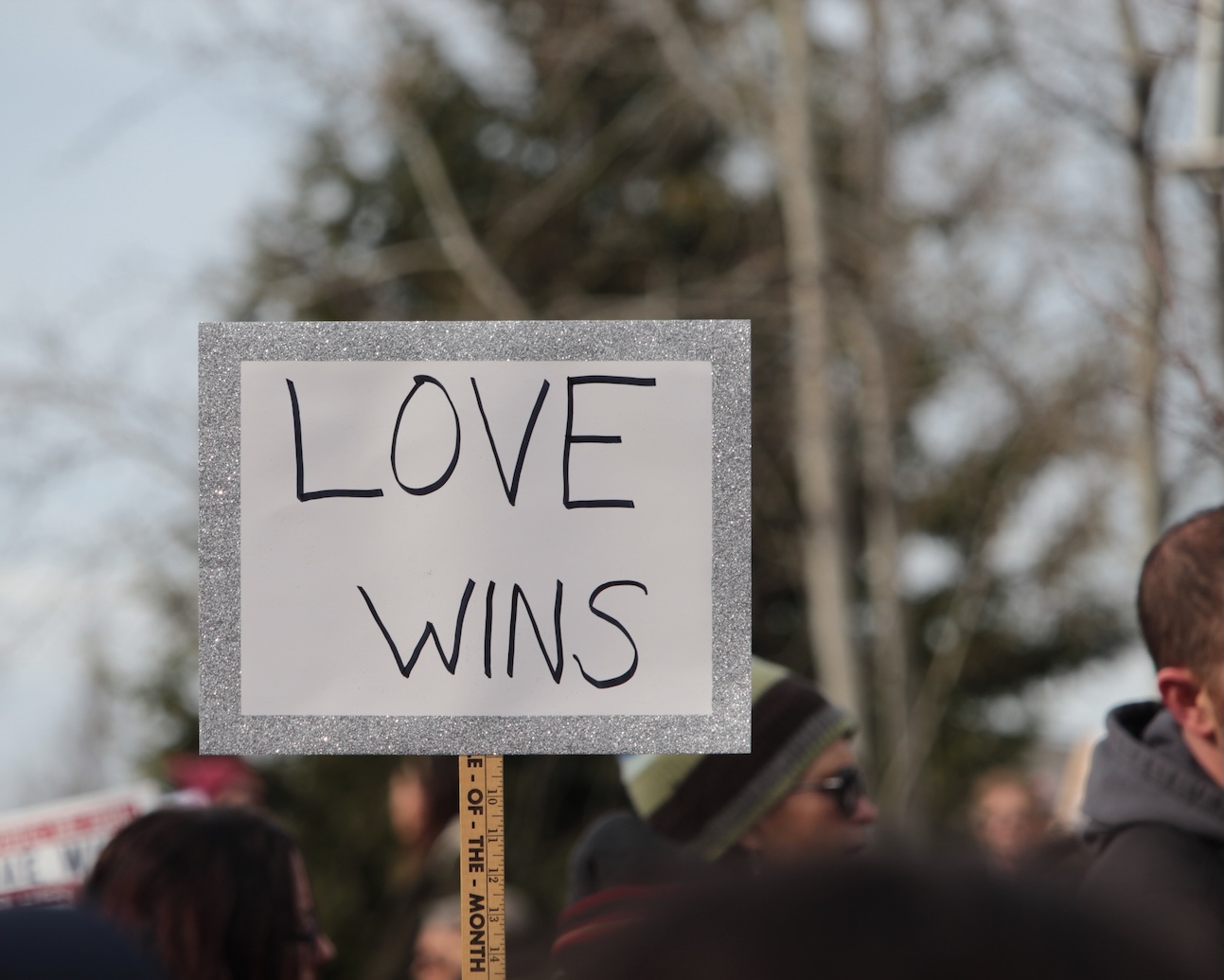
The Moral and Legal Contradiction
When There Is No Legal Path Forward
This is one of the most painful—and common—situations encountered.
A person may have violated immigration law (perhaps under duress or necessity), built a life of hard work and faith, raised U.S.-citizen children, and still face a system that offers no remedy. They are caught in a moral and legal contradiction.
Here is the heart of the matter.
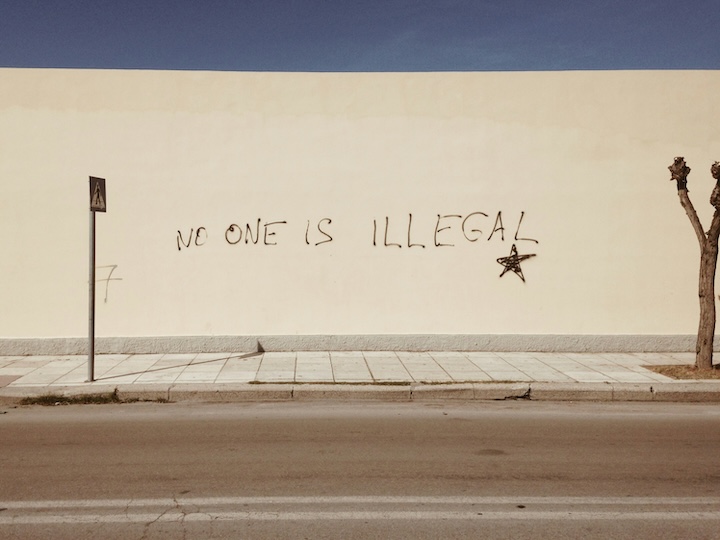
A person can be legally “illegal” yet morally innocent—or even heroic—when fleeing grave danger or providing for family. Legal standing and moral standing are not the same thing.
The ultimate Catholic answer to this contradiction is to distinguish between the two:
- A person can be in violation of civil immigration law
- While being morally blameless (when acting under true necessity)
- Or even praiseworthy (when fulfilling fundamental duties to family)
When human laws create impossible situations with no path to reconciliation, the system itself stands in need of reform.
“There are a lot of problems in the system”. (Pope Leo XIV)
How the Undocumented Can Live in Moral Integrity
Before God — One’s relationship with God is not dependent on immigration status. If the original violation occurred under genuine necessity and the person now lives virtuously and seeks legitimate paths forward, they can stand with clear conscience and approach the sacraments (where canonically possible) with a clear conscience.
Before family — The duty to feed and protect one’s children is prior to immigration statutes. The obligation to provide for and protect one’s family is fundamental. If immigration violation was necessary to fulfill this duty, the moral weight shifts away from the violation itself.
Before conscience — Conscience requires honest examination:
- Has one acted with necessity rather than mere convenience?
- Does one contribute positively to the community?
- Does one seek lawful resolution where possible?
A well-formed conscience can find peace even when legal status remains irregular, if motivated by genuine necessity and characterized by virtuous living.
Before the political community — Catholic Social Teaching counsels
- Contributing to the common good through work, community participation
- Respecting laws that protect public safety and order
- Advocating for just reform of immigration systems
- Seeking legal pathways wherever they exist, however imperfect
- Living with integrity and transparency where possible
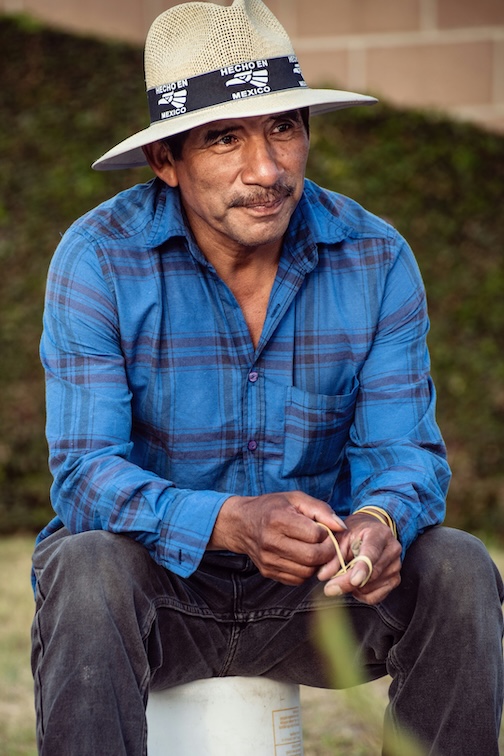
How the Undocumented Can Live in Moral Integrity
For the immigrant in the U.S. illegally, Catholic Social Teaching offers a clear moral framework for maintaining right relationship even amid legal limbo:
Before God — One’s relationship with God is not dependent on immigration status. If the original violation occurred under genuine necessity and the person now lives virtuously and seeks legitimate paths forward, they can stand with clear conscience and approach the sacraments (where canonically possible) with a clear conscience.
Before family — The duty to feed and protect one’s children is prior to immigration statutes. The obligation to provide for and protect one’s family is fundamental. If immigration violation was necessary to fulfill this duty, the moral weight shifts away from the violation itself.
Before conscience — Conscience requires honest examination:
- Has one acted with necessity rather than mere convenience?
- Does one contribute positively to the community?
- Does one seek lawful resolution where possible?
A well-formed conscience can find peace even when legal status remains irregular, if motivated by genuine necessity and characterized by virtuous living.
Before the political community — Catholic Social Teaching counsels
- Contributing to the common good through work, community participation
- Respecting laws that protect public safety and order
- Advocating for just reform of immigration systems
- Seeking legal pathways wherever they exist, however imperfect
- Living with integrity and transparency where possible
We must always remember:
This moral framework is contingent on the extent to which the person is fleeing threats to life, safety, or securing basic necessities for their family. If this is absolutely the case, the principles above apply fully. As one becomes removed from this condition, their moral justification likewise reduces.
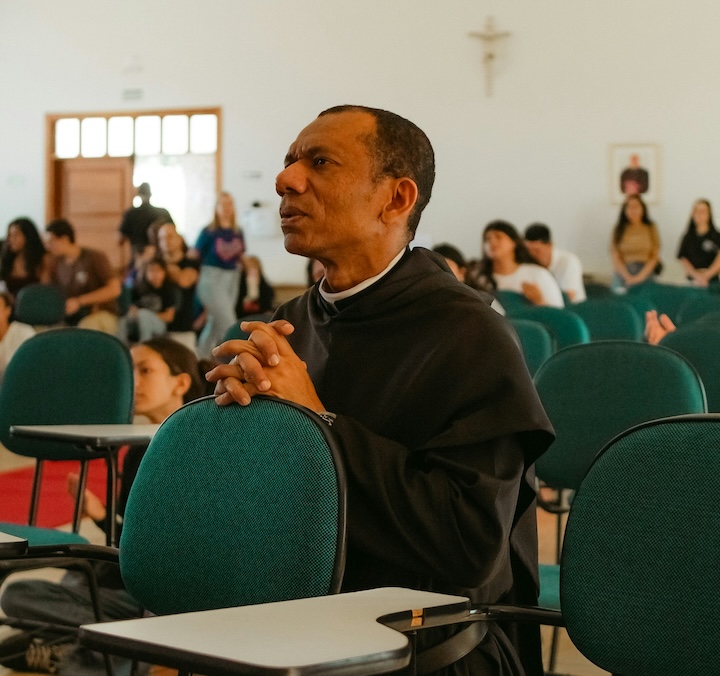
Guidance for Pastors and Immigration Workers
When counseling parishioners (and immigrants) about immigration status:
-
- Affirm their dignity – Their worth before God is not contingent on legal status
- Examine circumstances – Was there genuine necessity? Are there legal pathways now?
- Clarify moral duties – Make the distinction between legal and moral standing and how motivating circumstances affects culpability. Point out that even irregular status doesn’t exempt from obligations to community
- Offer hope – God’s mercy is infinite; legal status doesn’t determine salvation
- Encourage advocacy – Direct them toward just immigration reform efforts
- Provide resources – Connect them with Catholic legal services and immigration attorneys
Remember: Your role is spiritual guidance, not legal advice. Partner with qualified immigration attorneys for legal questions.
Pope St. John Paul II put it best:
“The challenge is to combine the welcome due to every human being, especially when in need, with a reckoning of what is necessary for both the local inhabitants and the new arrivals to live a dignified and peaceful life”.
Toward a Just and Humane Immigration Framework
Catholic Social Teaching refuses false choices. It insists on both compassion and responsibility, on both the dignity of immigrants and the legitimate concerns of the political community.
We can—and must—defend both human dignity and the rule of law. Until our laws better reflect that balance, millions of our brothers and sisters will live in the shadows.
CST challenges citizens to advocate for immigration policies that recognize the full human dignity of every person and create pathways for reconciliation that truly serve the common good.
Catholics are called to:
-
- Educate ourselves and others about Catholic Social Teaching on immigration and what the Church actually teaches.
- Advocate and pray for comprehensive, dignified and just immigration reform at local, state, and federal levels that respect both human dignity and the common good.
- Remember that no government document determines a person’s worth before God.
- Support Catholic services that help immigrants to legally navigate the system.
- Reject anti-immigrant rhetoric that dehumanizes or scapegoats.
- Create welcoming spaces where immigration status is not a barrier to participation.
- Support immigration legal clinics through Catholic Charities.
- Provide pastoral care without regard to documentation
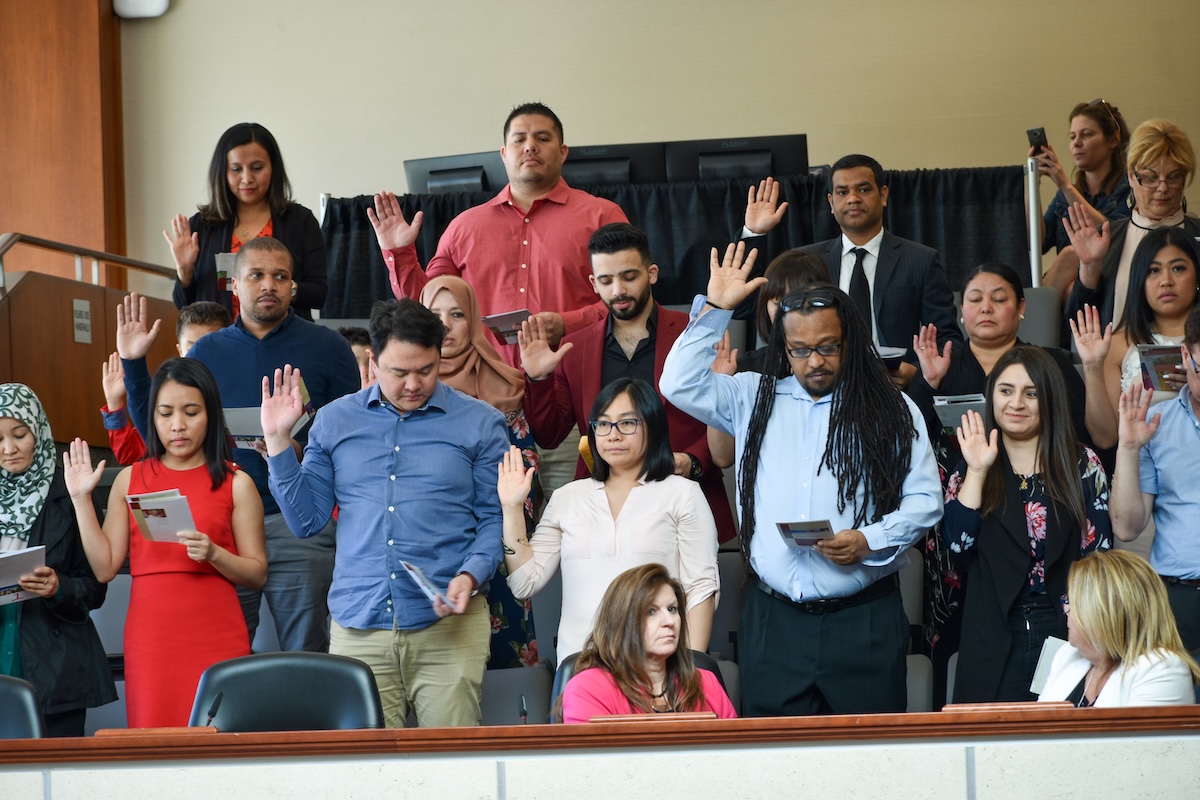
Toward a Just and Humane Immigration Framework
Catholic Social Teaching refuses false choices. It insists on both compassion and responsibility, on both the dignity of immigrants and the legitimate concerns of the political community.
We can—and must—defend both human dignity and the rule of law. Until our laws better reflect that balance, millions of our brothers and sisters will live in the shadows.
CST challenges citizens to advocate for immigration policies that recognize the full human dignity of every person and create pathways for reconciliation that truly serve the common good.
Catholics are called to:
-
- Educate ourselves and others about Catholic Social Teaching on immigration and what the Church actually teaches.
- Advocate and pray for comprehensive, dignified and just immigration reform at local, state, and federal levels that respect both human dignity and the common good.
- Remember that no government document determines a person’s worth before God.
- Support Catholic services that help immigrants to legally navigate the system.
- Reject anti-immigrant rhetoric that dehumanizes or scapegoats.
- Create welcoming spaces where immigration status is not a barrier to participation.
- Support immigration legal clinics through Catholic Charities.
- Provide pastoral care without regard to documentation
Legitimate Concerns and Complexities
Catholic Social Teaching’s emphasis on human dignity and the right to migrate does not mean other concerns lack validity. A complete analysis must acknowledge the real tensions and trade-offs involved in immigration policy.
Final Word
The burden falls on policymakers to craft laws that reflect human dignity and justice—and to eliminate the contradictions that trap millions in moral and legal limbo.
But until that day comes, we must remember: our brothers and sisters who lack legal status are not less beloved by God, less worthy of dignity, or less part of our Christian community.
In the meantime, immigrants can maintain moral integrity through faithfulness, virtue, community contribution, and care for family—even when their legal status remains unresolved through no fault of their own willingness to comply.
Common Objections Answered
Q: But didn't they break the law? How can that not be sinful?
A: Catholic moral theology and social teaching has always distinguished between legal obligations and moral obligations. Not all laws carry the same moral weight, and not all violations of law are equally sinful.
Breaking the speed limit, evading taxes, and murder are all illegal—but they’re not morally equivalent. The Catechism itself recognizes that “the citizen is obliged in conscience not to follow the directives of civil authorities when they are contrary to the demands of the moral order”. (CCC 2242)
When a mother crosses a border illegally to escape gang violence that has already killed her husband, her act is legally impermissible but may carry little or no moral fault.
Q: Aren't you just encouraging illegal immigration?
A: No. The Church clearly teaches that immigrants have real moral obligations (see next section) and that nations have legitimate authority to regulate borders. The Church’s teaching is not political advocacy.
What we’re explaining is the Church’s consistent teaching: legal status and moral standing are not identical. A person can be in violation of civil law while acting morally—or even heroically.
The Church calls for immigration reform that creates humane, realistic pathways so fewer people face impossible choices.
Q: What about people who waited in line legally? Isn't this unfair to them?
A: This is a legitimate concern about justice and the common good.
The Church acknowledges it directly. Pope St. John Paul II taught: “The challenge is to combine the welcome due to every human being, especially when in need, with a reckoning of what is necessary for both the local inhabitants and the new arrivals to live a dignified and peaceful life”. (Message for World Day of Peace, 13)
However, the question assumes there is always a “line” to wait in. For many people—especially those fleeing immediate danger or extreme poverty — no legal pathway exists. The U.S. immigration system offers no realistic or accessible pathway — no matter how long they wait.
Reform should create pathways that are both orderly and humane, respecting both those who followed existing rules and those trapped by the absence of realistic options.
Q: If someone stays here illegally for years, doesn't that make it worse?
A: Not necessarily—and sometimes the opposite.
If a person originally entered under genuine necessity, their continued presence may actually demonstrate their positive contribution to the common good: working honestly, raising children, participating in parish life, paying taxes.
Catholic Social Teaching recognizes that long-term integration creates bonds of solidarity. The political community has obligations toward those who have become part of the social fabric—especially children who have grown up knowing no other home (like DACA recipients).
Catholic Social Teaching and Other Issues

























Why These Issues Matter
Catholic social teaching informs our consciences and requires action from us, the lay faithful. “Working for a just distribution of the fruits of the earth and human labor is not mere philanthropy. It is a moral obligation.
For Christians, the responsibility is even greater: it is a commandment.”



CAPP-USA (Centesimus Annus Pro Pontifice, Inc.) is the United States affiliate of the Vatican-based pontifical foundation of Fondazione Centesimus Annus Pro Pontifice, established by Pope St. John Paul II in 1993 to promote Catholic Social Teaching in fidelity to the Magisterium of the Catholic Church. CAPP-USA is a 501(c)(3) nonprofit organization.