Learning from the Holy Family
by CAPP-USA
The Joy of the Family
Each year, just days after Christmas, the Church invites us to linger not at the manger alone, but at a home. On the Feast of the Holy Family, our attention turns to Jesus, Mary, and Joseph—not as distant icons, but as a real family bound together by love, sacrifice, and faithfulness.
In contemplating them, we are reminded that the family is not a human invention or a social convenience, but a gift from God entrusted with a vital mission. As Pope Saint John Paul II famously taught, “the future of humanity passes by way of the family”. (Familiaris Consortio, 86)
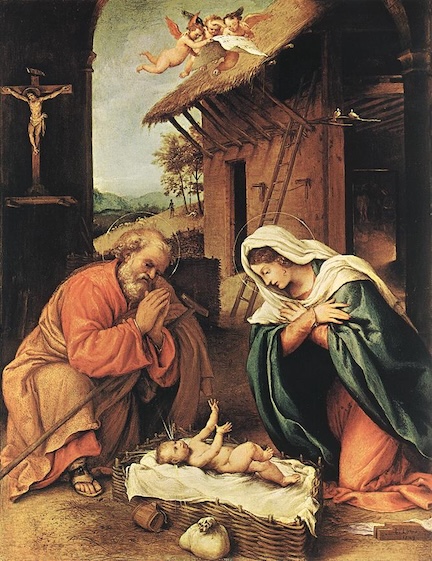
The holy family teaches us about marriage, love, and the family’s role in society.
The family is where human life is welcomed, love is learned, and the dignity of the human person is first recognized.
The family is the place where love becomes visible. It is a “communion of persons,” reflecting the very life of God, who in his deepest mystery is not solitude but relationship—Father, Son, and Holy Spirit. (Catechism of the Catholic Church, 2205)
Created in the image of a God who is love, man and woman are called to form a community where love is lived not in theory, but in practice: through patience and forgiveness, daily responsibilities, shared meals, and quiet acts of care. As Pope Francis observed, the family is “where we learn to live with others despite our differences and to belong to one another”. (Evangelium Gaudium, 66)
The Ordinary Holiness of the Family
This ordinary holiness is anything but small. Pope St. John Paul II emphasized that the family is “the place in which life—the gift of God—can be properly welcomed and protected…and can develop in accordance with what constitutes authentic human growth”. (Centesimus Annus, 39)
It is in the family that trust is formed, belonging is secured, and the foundations of a culture of life are laid.
At the heart of the family stands marriage: “the measure of true love between a man and a woman—a love that is total, faithful and fruitful”. (Pope Leo XIV)
Marriage is not merely an emotional bond or a private arrangement; it is a vocation rooted in irrevocable consent that creates a space where love can endure, grow, and give life. (Gaudium et Spes, 48) From this covenant flows the family, where children are formed not only biologically, but humanly and spiritually.
The Holy Family is a Model of Suffering
The Holy Family reminds us that family life is not spared difficulty. Mary and Joseph knew uncertainty, sacrifice, and displacement. Yet it was precisely within these trials that love matured and trust in God deepened.
Their home in Nazareth became the first school of faith for Jesus himself—a place where prayer, work, obedience, and love were woven into daily life. For this reason, the Church calls the family “the first and fundamental school of social living”. (Pope St. John Paul II, 37)
Because of this formative role, the family matters not only for individuals but for society as a whole. Long before laws or institutions, the family forms persons capable of love, responsibility, and solidarity. When families flourish, society is renewed; when they are weakened or ignored, the social fabric itself begins to fray.
As we honor the Holy Family of Nazareth, this feast invites us to contemplate a truth both simple and demanding: renewal begins at home. The future passes by way of the family—and that future begins wherever love is faithfully lived.
Top Magisterial Quotes about Family
The Top Marriage Quotes from the Church
Healthy Families are the Future
Is Family Life Today Under Attack?
Types of Families and New Definitions
What Does the Bible Say About Divorce?



CAPP-USA (Centesimus Annus Pro Pontifice, Inc.) is the United States affiliate of the Vatican-based pontifical foundation of Fondazione Centesimus Annus Pro Pontifice, established by Pope St. John Paul II in 1993 to promote Catholic Social Teaching in fidelity to the Magisterium of the Catholic Church. CAPP-USA is a 501(c)(3) nonprofit organization.