I Have Loved You:
Five Surprising Ideas About Poverty from Pope Leo XIV’s Dilexi Te
by CAPP-USA
Beyond Spare Change
Most of us think we have a decent handle on charity. It’s the spare change we drop into a cup, the canned goods we donate to a food drive, the check we write to a good cause. It is a kind, voluntary act—a commendable but optional part of a good life. But what if this view is fundamentally incomplete?
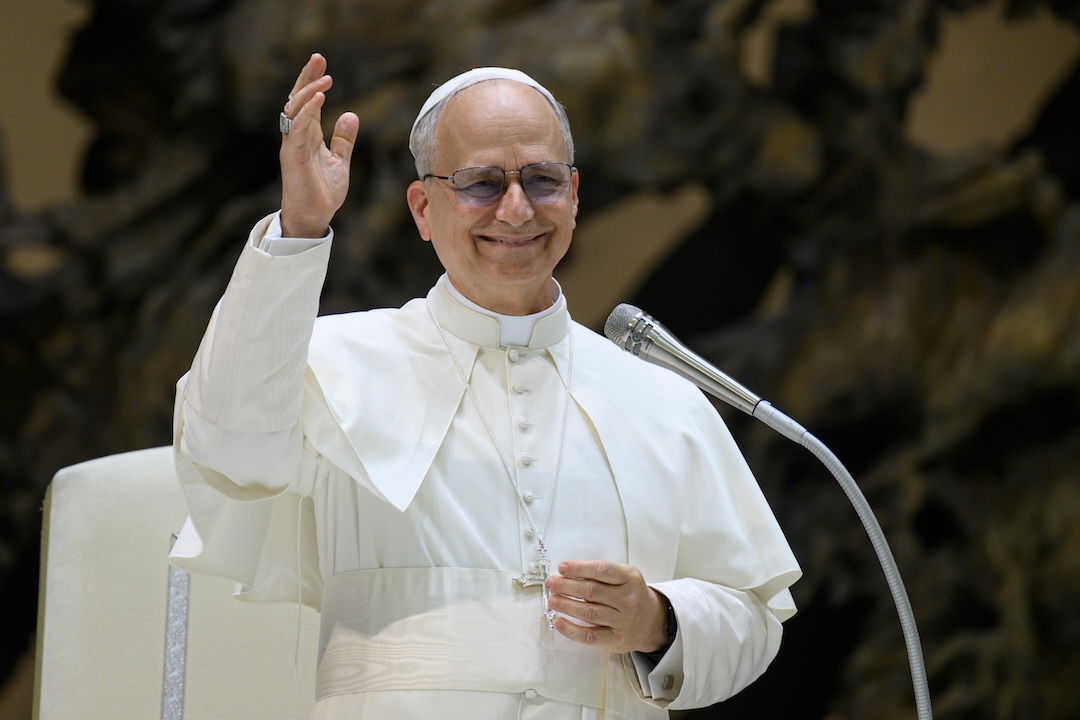
Here are 5 surprising insights about poverty and the poor from Dilexi Te.
Pope Leo XIV’s Apostolic Exhortation, Dilexi Te (I Have Loved You) presents a vision of our relationship with the poor that is far more radical and demanding than the conventional modern view.
It dismantles the separation between personal piety and social justice, presenting them as a single, indivisible act of faith and here we’ll share five surprising and counter-intuitive takeaways from this letter—ideas that have been woven through Christian tradition for centuries but feel revolutionary today, challenging the foundations of how we think about wealth, poverty, and justice.
1. Not Giving to the Poor Isn’t Just Uncharitable—It’s Stealing
This is perhaps the most jarring idea in the entire text. Early Christian leaders like Saint John Chrysostom and Saint Ambrose argued that the wealth we possess is not exclusively our own.
This radical view is rooted in a core Christian principle known as the universal destination of goods—the idea that God destined the earth and all it contains for all people. Therefore, when we hold onto surplus goods—anything beyond what we need for a dignified life—while others are in extreme need, we are not simply being ungenerous. We are committing an act of injustice equivalent to theft.
This concept is shocking because it directly confronts modern ideas of absolute private property rights. It reframes our relationship with the poor entirely. Charity is no longer an optional act of paternalistic kindness from the rich to the needy; it is a fundamental requirement of justice, a matter of restoring to others what is rightfully theirs. As the text quotes Saint John Chrysostom, the point is made with breathtaking clarity: “not giving to the poor is stealing from them, defrauding them of their lives, because what we have belongs to them.” (Pope Leo XIV, 42)
2. The Church’s Most Precious “Treasure” Isn’t Gold—It’s People in Poverty
A powerful historical account from the third century perfectly illustrates this second radical idea. The story follows Saint Lawrence, a deacon in Rome. During a time of persecution, the Roman authorities demanded that he turn over the “treasures of the Church,” assuming he would produce chests of gold and silver vessels. Lawrence asked for a day to gather them.
When he returned, he did not bring gold. Instead, he presented the city’s poor, sick, and suffering people. In this profound and defiant act, he made a declaration that turns our entire value system upside down.
The true wealth of a community is not in its material assets, its buildings, or its bank accounts. Its most precious treasure is its people, especially the most vulnerable, because it is in them that Christ is most present. As he stood before the authorities, Saint Lawrence pointed to the crowd of the afflicted and said: “These are the treasures of the Church.” (Pope Leo XIV, 38)
3. The Poor Aren’t Just Objects of Aid—They Are Our Teachers
In the typical charity model, there is a clear giver and a clear receiver. One has resources and knowledge; the other has needs. Dilexi Te completely flips this dynamic on its head.
It argues that people in poverty are not merely passive recipients of our aid but are active subjects and agents of evangelization. Their life experience—their reliance on faith, their resilience in the face of hardship, their deep understanding of human suffering—gives them a unique wisdom that those who live in comfort often lack.
The implication is profound: we are called to “let ourselves be evangelized” by the poor. This means that in any genuine encounter, those who come to “give” have as much, or perhaps more, to receive. The encounter is not just about gaining perspective; it is a moment of self-
confrontation.
As the text suggests, the poor act as our “silent teachers,” revealing our own presumptions, our hidden arrogance, and the true precariousness of a life built on material security. The power dynamic is reversed, and charity becomes a mutual relationship of teaching and learning. The text puts it this way: “…let ourselves be evangelized by the poor and acknowledge the mysterious wisdom which God wishes to share with us through them.” (Pope Leo XIV, 102)
4. The Definition of “Poverty” Isn’t Fixed in Stone
We often think of poverty in absolute terms—a specific dollar amount per day. Dilexi Te rejects such a simplistic definition. It argues that poverty is a dynamic concept that must be understood relative to its specific time and place. What constitutes poverty, it explains, must be measured against the “context of the actual opportunities available in each concrete historical period.” (Pope Leo XIV, 13)
The example given is electricity. In a previous era, not having access to electric energy was not a sign of poverty because it wasn’t a standard part of life. Today, in a developed society, a lack of electricity could very well be a sign of profound deprivation, cutting a person off from communication, education, and economic opportunities.
This is a crucial insight. It moves the conversation beyond a simple income metric and forces us to ask a deeper question, echoing a formal European Community definition cited in the text: What does it mean to be “excluded from the minimum acceptable way of life” (Pope Leo XIV, 13) in our society right now? It makes our understanding of poverty relevant and adaptable to a rapidly changing world.
“Poverty must always be understood and gauged in the context of the actual opportunities available in each concrete historical period.” (Pope Leo XIV, 13)
5. An “Inseparable Bond” Exists Between Faith and the Poor
The final and most foundational idea is that our faith and our relationship with the poor are inextricably linked. This is not about tacking on social work to religion; it’s about preventing faith from becoming “empty talk.” (Pope Leo XIV, 48) Dilexi Te insists that action for the poor is primary to our living faith.
This principle undergirds all the other takeaways. It explains why withholding surplus is theft, why the poor are the Church’s treasure, and why they are our teachers. A relationship with God is inseparable from a relationship with the most vulnerable.
Dilexi Te warns that any community that forgets this will not only fail in its mission but will “risk breaking down… It will easily drift into a spiritual worldliness camouflaged by religious practices, unproductive meetings and empty talk.” (Pope Leo XIV, 113)
The central argument is stated without reservation in a quote from Pope Francis: “We have to state, without mincing words, that there is an inseparable bond between our faith and the poor.” (Pope Leo XIV, 36 quoting Pope Francis, Apostolic Exhortation Evangelii Gaudium, 48)
Conclusion: A Dream That Can Come True?
These five ideas—charity as justice, not just choice; the poor as treasure, not a problem; the poor as teachers, not just “recipients”; poverty as a dynamic condition, not a static number; and the unbreakable link between our faith and the poor—are deeply challenging. They demand more than just our spare change; they demand a change in our entire way of seeing the world.
Pope Leo XIV references the parable of the Good Samaritan, in which a traveler comes across a man beaten and left for dead on the side of the road. It suggests that encountering the poor is an inescapable part of life. The only real choice we have is how we respond. After considering these ideas, the question isn’t just which character we want to be, but which one our actions prove we are.
What Exactly is the Preferential Option for the Poor?
Structural Poverty and Catholic Social Teaching




CAPP-USA (Centesimus Annus Pro Pontifice, Inc.) is the United States affiliate of the Vatican-based pontifical foundation of Fondazione Centesimus Annus Pro Pontifice, established by Pope St. John Paul II in 1993 to promote Catholic Social Teaching in fidelity to the Magisterium of the Catholic Church. CAPP-USA is a 501(c)(3) nonprofit organization.