From Pope Leo XIII’s Aeterni Patris to the Present Day: A Single Vision for the Concrete Life of Peoples
In Dialogue with the Encyclical Magnifica Humanitas
by Eutimio Tiliacos – Former General Secretary, Fondazione Centesimus Annus Pro Pontifice
INTRODUCTION
This article offers a timely reflection on the remarkable continuity between Pope Leo XIII's Aeterni Patris (1879) and Pope Leo XIV's Magnifica Humanitas (2026), tracing a Catholic vision that holds faith, reason, science, and the concrete life of peoples together in a single conversation. Beginning with the Thomistic conviction that the study of the natural world can lead the human mind toward deeper truths, the author turns to the challenges posed by modern technology — and artificial intelligence in particular.
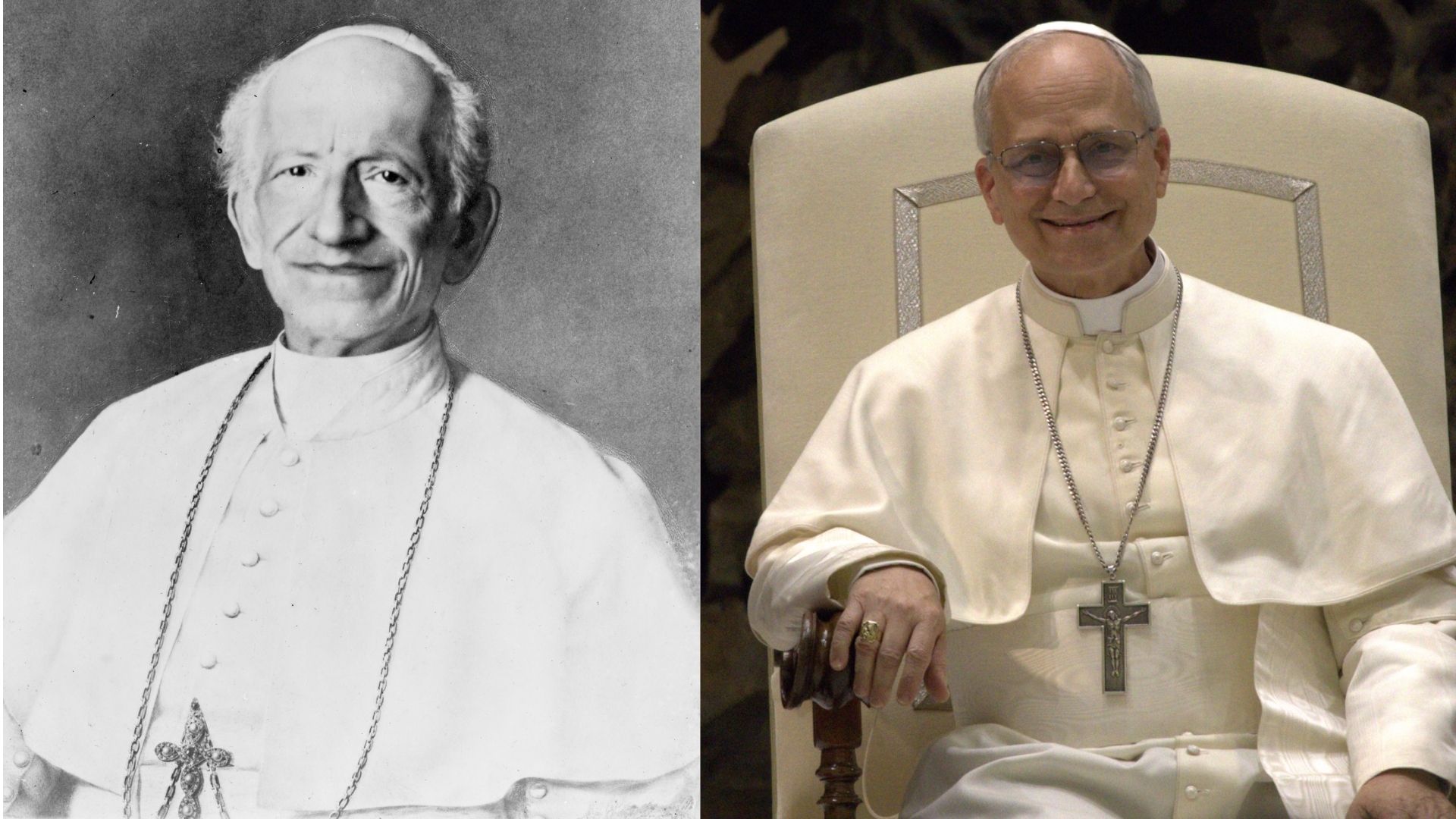
From Pope Leo XIII's Aeterni Patris to Pope Leo XIV's Magnifica Humanitas
At the heart of the article is a question of growing urgency: not simply what technology can do, but who controls it, what moral vision guides it, and whether its development serves truth, human dignity, freedom, and the common good.
Read together, the two encyclicals emerge not as separate interventions but as stages in a single, century-and-a-half-long project of Catholic social doctrine — one in which Magnifica Humanitas stands not as a departure but as a contemporary development of the Church's long-standing concern with truth, human responsibility, and the life of peoples (see Three Questions at the Heart of Magnifica Humanitas)
AETERNI PATRIS & MAGNIFICA HUMANITAS
On August 4, 1879, approximately twelve years before the publication in 1891 of Rerum Novarum, Pope Leo XIII promulgated the Encyclical Letter Aeterni Patris, stating:
“Between the certain and accepted conclusions of modern physics and the philosophical principles of the School [Scholasticism, editor’s note], there is no true and real contradiction (...) In this regard, it is also useful to point out that it is with the greatest injustice that this same philosophy is accused of being opposed to the progress and advancement of the natural sciences.” (Aeterni Patris, 30)
Referring to the work of the leading representatives of Scholasticism, he expressed himself in these words:
“Indeed, the Scholastics, following the thought of the Holy Fathers, having often taught in Anthropology that the human intellect arrives at knowledge of incorporeal and spiritual things only through material things, understood for themselves that nothing is more useful to the philosopher than diligently investigating the secrets of nature and devoting himself at length to its study. They confirmed this also by their own example, since St. Thomas, Blessed Albert the Great, and the other representatives of Scholasticism did not devote themselves solely to philosophical speculation, but also concerned themselves greatly with knowledge of natural things. Indeed, in this field there are not a few of their assertions and judgments that modern scholars approve and maintain to be consistent with the truth.” (Aeterni Patris, 30)
With regard to St. Thomas’s contribution to a closer dialogue between those knowledgeable about the natural world and those versed in philosophical sciences, it should be emphasized that Aquinas, when he was young—and more precisely during a period not exactly specified but falling between 1239 and 1244—studied in Naples at Europe’s first state university. There he had as a teacher Peter of Ireland, formerly a professor at Oxford University, who was probably the first to introduce him to the study of Aristotle and to the commentaries on the Hellenistic philosophers written by Avicenna and Averroes.
This enabled St. Thomas to consolidate a philosophical vision that was not separated from an intimate knowledge of the natural world, understood as a further means of striving toward knowledge of God.
What Aquinas took in particular from Greek thought and placed at the center of his reflection was the principle of the analogy of being, in which the expression “analogy” refers to a mental process that establishes a relation of equality not between substances but between relationships, thereby allowing the human person to arrive at an intuition of immaterial things simply on the basis of acquired experience and the observation of things that exist concretely.
In the recently published Encyclical Letter Magnifica Humanitas, Pope Leo XIV takes up and gives broad substance and occasion for reflection to the contemporary relationship between faith and nature, and between faith and technology, already raised by his predecessor almost a century and a half ago.
In the introductory section of the present document, published on May 15, 2026, he warns that:
“When some objected that the Church should not waste energy on worldly questions, but should concern herself with communicating a message of eternal life, he [Pope Leo XIII, editor’s note] responded with realism and wisdom that the proclamation of the Gospel cannot forget the concrete life of peoples”. (Magnifica Humanitas, 3)
The subject is therefore not only philosophical but also theological, touching in particular on the question of what may be defined as reality within the Christian vision when the intuition of immaterial things concerns every field of knowledge.
The debate that developed in the Scholastic period, beginning in monastic centers and later involving the emerging European universities from the beginning of the second millennium onward, had the merit of once again placing at the center of philosophical reflection the relationship between natural reality and the beyond of the Christian vision, which is rooted in a conception of the universe as a whole rather than as something partial.
It also emphasized the importance and urgency of seeking the ultimate end of the human person, a search that cannot disregard the existence of God in every manifestation.
This beyond, if it is to be explored deeply by the human person, requires the active involvement of the soul, without that involvement being mediated or obscured by excesses.
In his book Prayer in Ancient Greece, Édouard des Places—who for a long period of the twentieth century also taught History of Religions and Greek Philosophy at the Biblical Institute in Rome—stated that the religion of Apollo distanced man from the divine, but only apparently.
Apollo’s maxim inscribed at the entrance to the temple at Delphi, Know thyself, was in fact intended to condemn as excessive the desire to approach the gods through practices that primarily involved losing contact with reality, thereby inducing in the human person a delirium of omnipotence.
Unlike Dionysian transports, which falsely identified the faithful with the god when they were in a mental state clouded by intoxicating substances, the knowledge of oneself found in Greek prayer and in Christian prayer does not consist solely in knowing one’s contingent human condition. It also entails discovering the importance of the soul that dwells within each person and enables union with God.
Édouard des Places comments in this regard:
“Sophocles teaches us through his heroes—Ajax, Oedipus, Philoctetes—not to have superhuman feelings. The soul alone derives from the gods; it is what constitutes the self; and through the union of his soul with God, man appears—and this is an essential pole of Greek religious thought—close to the divine.”
This framework, which brings philosophy and the empirical sciences into relationship while remaining conscious of the limits of the human condition, and which highlights nature’s analogies with creation, would establish itself during the nineteenth and twentieth centuries, despite the fact that these centuries were characterized by increasing materialism.
With the consolidation of the theories of quantum mechanics, particularly beginning in the 1920s, the scientific world would in fact be definitively confronted with a new reality: once the illusion of a universe explainable exclusively through deterministic principles had fallen away, a closer dialogue between the so-called “scientific” world—because it referred only to the empirical sciences—and the philosophical and theological world became necessary.
In this regard, Pope Leo XIII had already concluded the passage from Aeterni Patris cited above by adding:
“Moreover, in this very age of ours, many distinguished professors of the physical sciences publicly and openly attest that between the certain and accepted conclusions of modern physics and the philosophical principles of the School there is no true and real contradiction.”
Scientific progress, however, is quite different from technological progress, the latter being definable as the simple accumulation of different devices and processes combined together.
The risk, therefore, is that while among many scholars of the empirical sciences there is emerging a desire for knowledge of the beyond and a renewed appeal to faith in God, certain deviations in the conceptual framework and the growing manipulation of truth arising from the exclusive use of new technologies such as so-called artificial intelligence (AI) may, by contrast, call into question the results achieved thus far by that dialogue and once again turn back the clock of history, creating a deep new divide between science and faith.
For this reason, it is first of all necessary and urgent to distinguish clearly between scientific progress, which offers us the opportunity to draw closer to God, and purely technological progress, which, if misused, may distance us from the vision of God.
Pope Leo XIV warns that technology should not in itself be regarded as a force antagonistic to the human person. On the contrary, he adds, it has been rooted in our history from the beginning, because it is a profoundly human reality connected with human autonomy and freedom.
He then observes:
“Today, however, we find ourselves facing a new situation in which the power and pervasiveness of emerging technologies are woven into the fabric of daily life, shape decision-making processes, and profoundly affect the collective imagination”. (Magnifica Humanitas, 4)
To prevent this from occurring in a distorted manner and to ensure that the human person is not deprived of his or her autonomous capacity for judgment—especially in our present age dominated by artificial intelligence (AI)—we must realistically ask, as Magnifica Humanitas puts it, who today possesses this power and the power to appropriate exclusively the profits deriving from the commercialization of technological advances, and toward what ends that power is directed:
“We cannot ignore that nuclear energy, biotechnology, information technology, knowledge of our own DNA, and other capacities we have acquired [...] give those who possess knowledge, and above all the economic power to exploit it, an impressive dominion over the whole of humanity and the world.”
And again, making an important point:
“In the past, it was above all States that guided and directed innovation. Today, by contrast, the principal engines of development are private actors, often transnational, possessing resources and capacities for intervention greater than those of many governments. Technological power thus assumes an unprecedented face, predominantly ‘private,’ and for that very reason still more difficult to discern, govern, and orient toward the common good.”
Pope Leo XIV therefore concludes that we cannot regard AI as morally neutral. (Magnifica Humanitas, 104) And if we want the dialogue between science and philosophy to continue effectively, we cannot limit ourselves to calling for the moralization of machines by assimilating AI to human behavior without having the courage to discuss the ethical code that is to be used.
In other words, a more moral AI is of little use if that morality is determined by only a few.
He concludes:
“When the question of what is true loses its importance and a pragmatism takes hold that is satisfied with what appears useful or effective, democratic life is weakened. It does not live by rules and procedures alone, but above all by an honest relationship with facts and a genuine orientation toward the good of persons and of the social body. Indifference to truth slowly but inexorably leads toward totalitarianism, for which, as the philosopher Hannah Arendt wrote, the ideal subjects are not so much those who are ideologically convinced, but ‘people for whom the distinction between fact and fiction (that is, the reality of experience) and the distinction between true and false (that is, the standards of thought) no longer exist’”. (Magnifica Humanitas, 134)
Aeterni Patris and Magnifica Humanitas are therefore two encyclicals that should be read in complete continuity with one another, as parts of a single project of the Church’s Social Doctrine that has developed within Catholicism for approximately a century and a half through a series of intermediate stages, always animated, however, by a single vision aimed at uniting the spiritual life with the concrete life of peoples through the search for truth.
A truth—which should be further qualified—is something different from a mere investigation into a subjective reality distorted by the precariousness of the human senses and mind, or from a simple snapshot of an objective and contingent reality detached from that which constitutes the ultimate purpose of human existence.
Rather, it signifies a search capable of restoring within us the sense of a moral conscience that is often lost in today’s digital world, enabling us to judge good and evil, grasp the ultimate meaning of situations, and become fully conscious of and fully responsible—accountable—for the consequences of our actions. (Magnifica Humanitas, 99)

Politics

Economics