What Does the Catholic Church Teach About Gun Control and Self-Defense?
Catholic teaching affirms legitimate self-defense as a right—and sometimes a duty—while also requiring proportionality, respect for human life, subsidiarity and the common good.
by CAPP-USA
Catholic Social Teaching and Gun Control Pros and Cons
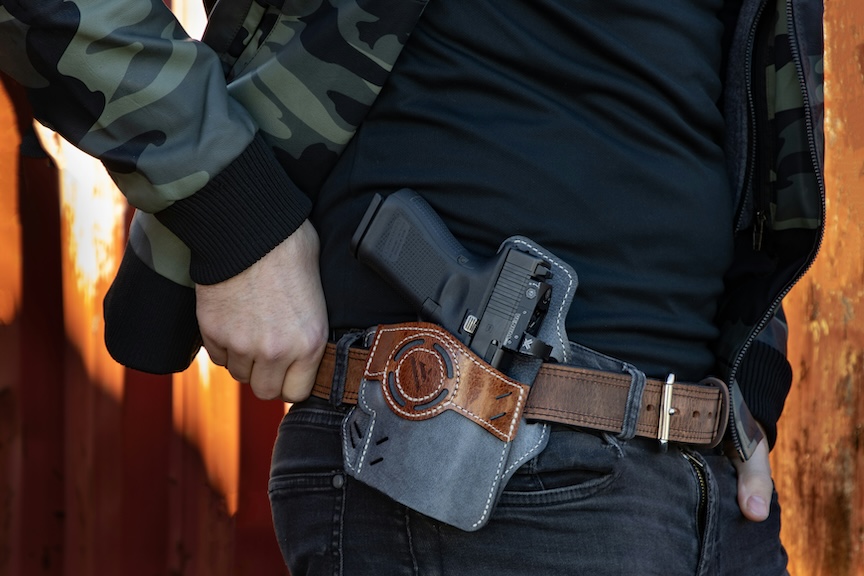
Gun control must not forget the principle of human dignity, the right of self-defense, or the pursuit of the common good.
Updated August 2026
Debates over the pros and cons of gun control often begin with policy—background checks, licensing, concealed carry, firearm restrictions and enforcement. Catholic Social Teaching begins somewhere else: with the dignity of the human person, the sanctity of life, the right of legitimate self-defense and the demands of the common good.
That means there is no single “Catholic” answer to every gun-control proposal. Instead, each policy has to be judged by how well it protects innocent life, respects legitimate self-defense, uses force proportionately, and balances state authority with subsidiarity and the common good.
Is Self-Defense a Right?
Yes.
“It is the right of those who are attacked to defend themselves”. (Pope Francis)
“Love toward oneself remains a fundamental principle of morality. Therefore it is legitimate to insist on respect for one's own right to life.” (CCC, 2264)
“Christian moral theology has never condemned legitimate personal or corporate self-defense”. (Statement to the UN)
“The Church accepts that everyone has the right to defend one’s life against mortal danger”. (Pontifical Council for the Pastoral Care of Migrants and Itinerant People, 3.6)
Can Self-Defense Be a Duty?
“Legitimate defense can be not only a right but a grave duty”. (CCC, 2265)
Indeed, “To defend oneself is not only lawful but also an expression of love”. (Pope Francis)
“Preserving the common good requires rendering the unjust aggressor unable to inflict harm.” (CCC, 2265)
What About the Sacredness of Life?
“The Incarnation reveals to us, with intense light and in a surprising way, that every human life has a very lofty and incomparable dignity.” (Pope Benedict XVI)
“The act of self-defense can have a double effect: the preservation of one's own life; and the killing of the aggressor....the one is intended, the other is not.” (CCC, 2263)
“Someone who defends his life is not guilty of murder even if he is forced to deal his aggressor a lethal blow”. (CCC, 2264)
Does “You Shall Not Kill” Prohibit Self-Defense?
“The Church’s Tradition has always consistently taught the absolute and unchanging value of the commandment ‘You shall not kill’…to kill a human being, in whom the image of God is present, is a particularly serious sin.” (Pope St. John Paul II, 54-55)

Self-defense is a right that must not be ignored by gun control policy.
Pope St. John Paul II notes that the Fifth Commandment “implicitly…encourages a positive attitude of absolute respect for life”. (Evangelium Vitae, 54)
What does this mean?
There are “situations in which values proposed by God’s Law seem to involve a genuine paradox. This happens for example in the case of legitimate defense…Certainly, the intrinsic value of life and the duty to love oneself no less than others are the basis of a true right to self-defense.” (Pope St. John Paul II, 55)
“Consequently, no one can renounce the right to self-defence out of lack of love for life or for self.” (Pope St. John Paul II, 55)
And, “one is bound to take more care of one's own life than of another's.” (CCC, 2264)
“Legitimate defense can be not only a right but a grave duty”. (CCC, 2265)
When Does Self-Defense Go too Far?
The Church warns that “If a man in self-defense uses more than necessary violence, it will be unlawful”. (CCC, 2264)
Pope Leo XIV on the “Pandemic of Arms”
After the August 2025 shooting at Annunciation Catholic School in Minneapolis, Pope Leo XIV — the first American pope — addressed gun violence directly, speaking in English at his Sunday Angelus:
“Let us plead God to stop the pandemic of arms, large and small, which infects our world.” He invoked the prophet Isaiah’s hope that nations would “beat their swords into plowshares and their spears into pruning hooks.” (Angelus, August 31)
This is not a teaching that guns themselves are evil, nor does it revise the Church's long-held teaching on the right and duty of self-defense outlined above. But it reflects the same Church that defends legitimate self-defense also grieving, urgently and specifically, the proliferation and misuse of weapons — a tension the Church holds rather than resolves in one direction.
In Magnifica Humanitas, Pope Leo XIV likewise warns about modern violence and weaponry while preserving “the right to self-defense in the strictest sense.” (Magnifica Humanitas, 192)
What About Gun Control?
Catholic Social Teaching also cautions against excessive state intervention. The Catechism teaches that “excessive intervention by the state can threaten personal freedom and initiative.” (CCC, 1883)
The principle of subsidiarity “Insists on necessary limits to the State’s intervention…inasmuch as the individual, the family and society are prior to the state and inasmuch as the State exists in order to protect their rights and not stifle them”. (Pope St. John Paul II, 11)
Because legitimate self-defense is a genuine right—and in some circumstances a duty—laws that substantially affect a person’s practical ability to defend innocent life deserve serious moral scrutiny. But the right of self-defense does not by itself determine which weapons, restrictions or regulations best serve the common good.
Bottom Line
Every person “can come to recognize the sacred value of human life...and can affirm the right of every human being to have this primary good respected to the highest degree.” (Pope St. John Paul II, 2)
Self-defense is not just tolerated by the Church — it can be a duty. The taking of a life is never something to celebrate, even when justified.
The state has a legitimate role in protecting the common good, but that authority is not unlimited. Subsidiarity requires respect for the rights and responsibilities of persons, families and lower communities. Specific gun-control policies therefore remain matters of prudential judgment on which faithful Catholics may disagree.
RELATED CATHOLIC SOCIAL TEACHING RESOURCES
The Common Good is a Result, not a Principle
Catholic Social Teaching and Sacrifice
Frequently Asked Questions
Q: Does the Catholic Church support gun control?
A: The Church has no official, comprehensive position on gun control specifically. She teaches that self-defense is both a right and, for those responsible for others, a duty, while also warning that “excessive intervention by the state can threaten personal freedom and initiative”. (CCC, 1883) Specific gun policy is left to prudential judgment guided by subsidiarity and the common good.
Q: Is killing in self-defense a sin?
A: No, provided it is proportionate and the intent is to preserve life, not to kill. The Catechism describes this as a case of double effect: “the preservation of one’s own life; and the killing of the aggressor…the one is intended, the other is not”. (CCC, 2263) Using more force than necessary, however, is unlawful.
Q: Is self-defense a right or a duty in Catholic teaching?
A: Both. It is a right rooted in the legitimate love of self (CCC, 2264), and for those responsible for the lives of others, it “can be not only a right but a grave duty”. (CCC, 2265)
Q: What has Pope Leo XIV said about gun violence?
A: Following the August 2025 shooting at a Catholic school in Minneapolis, Pope Leo XIV called for an end to the “pandemic of arms, large and small,” speaking in English at his Sunday Angelus — a direct address to his home country as the first American pope.